AI YC interview with Gstack agents
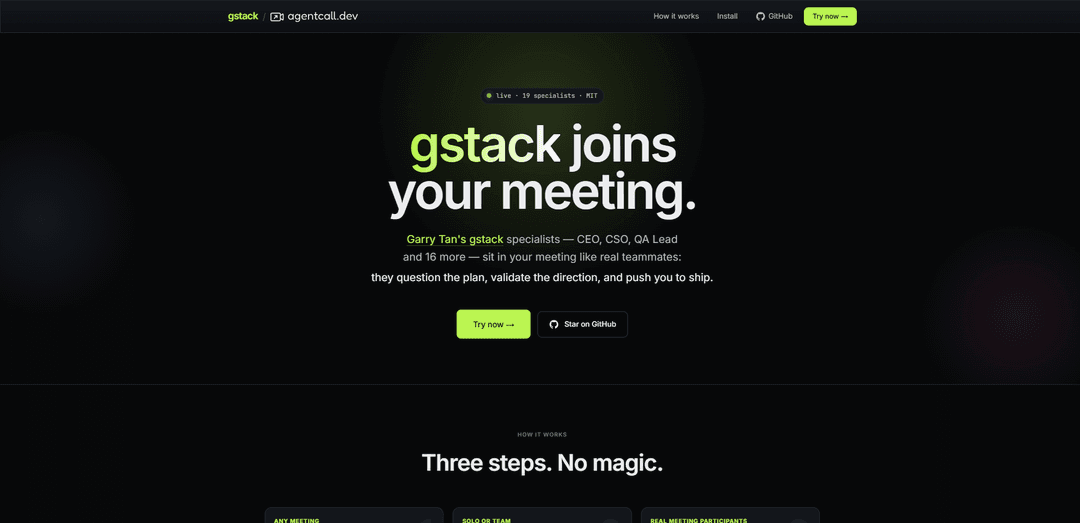
AI YC interview with Gstack agents is a YC-style, role-based mock interview where Garry Tan’s open-source gstack personas join your live Meet/Zoom/Teams call as voice bots with avatars to pressure-test your startup idea in real time—powered by your own local coding-agent “brain” (Claude Code/Codex/Cursor) and MIT-licensed prompts.
https://gstack-meeting.com/?ref=producthunt
Product Information
Updated:Aug 8, 2026
What is AI YC interview with Gstack agents
AI YC interview with Gstack agents is a meeting-native way to rehearse and stress-test a startup pitch the way a Y Combinator partner would—using the questioning style and evaluation framework encoded in gstack’s specialist personas. Instead of a generic chatbot, you bring a set of distinct roles (e.g., YC-office-hours partner/CEO lens, CSO, QA lead, and more) directly into a real video call, where they can speak, take turns, critique what you say and show, and leave written notes in chat. The personas are adapted from Garry Tan’s open-sourced gstack (MIT), and the system is designed around “bring your own brain,” meaning the intelligence comes from a coding-agent session you already run on your machine.
Key Features of AI YC interview with Gstack agents
“AI YC interview with Gstack agents” is a meeting-native, YC-style interrogation and feedback workflow where gstack specialist personas (e.g., CEO/YC-partner style, CSO, QA Lead, Designer) join a real Google Meet/Zoom/Teams as voice bots (optionally with 3D avatars and screenshare critique). The agents take turns in-character to pressure-test a startup idea the way YC office hours do—challenging assumptions, probing demand and wedge, critiquing what’s on your shared screen, and leaving written notes in chat—while using your own local coding-agent session (Claude Code/Codex/Cursor) as the “brain,” keeping repos/data on your machine and avoiding added LLM token costs from the meeting layer.
YC-style office-hours interrogation: Agents emulate the questioning cadence of YC partner sessions—pushing back on framing, probing who wants it, what the status quo is, and what the narrow wedge is before you write code.
Live voice agents inside real meetings: Specialists join Google Meet/Zoom/Teams as real-time voice participants with low-latency speech, barge-in/interrupts, and optional 3D avatar tiles—so the “interview” feels like an actual panel.
Screen-share critique + chat notes: Agents can react to what you present (pitch deck, product demo, roadmap, PRD) and drop structured feedback/notes directly into meeting chat for immediate follow-up.
Bring-your-own-brain (local coding agent): Each persona is powered by a coding-agent session you already run (Claude Code/Codex/Cursor), so context and work stay on your machine; the meeting bridge doesn’t become your compute or data hub.
Multi-specialist panel and presets: Choose from a roster of ~19 roles (CEO/CSO/QA/Designer/etc.) and team presets to simulate different interview panels (product, technical, go-to-market, QA/reliability).
Open-source + MIT-licensed personas/workflow: The meeting-join layer is MIT-licensed and built around open gstack personas, making it forkable/customizable for different interview rubrics, industries, or internal hiring loops.
Use Cases of AI YC interview with Gstack agents
Founder YC interview rehearsal: Simulate a high-pressure YC interview panel: founders present the idea, get rapid-fire demand/wedge questions, and iterate the pitch and product narrative based on live critique.
Product strategy review for startups: Run a structured ‘CEO/CSO’ review in a weekly meeting to stress-test roadmap choices, positioning, and metrics—especially useful for small teams without senior product leadership.
Enterprise innovation gate reviews: Use a consistent, repeatable questioning framework to evaluate internal proposals (new tools, platform bets, AI initiatives) and produce meeting notes that document rationale and risks.
Investor/demo day pitch practice: Teams rehearse demo flow and Q&A objections; the agents critique slides and demo clarity during screenshare and leave actionable edits in chat.
Technical architecture and QA readiness panel: Bring in engineering/QA personas to review system design, test plans, and release readiness in a call—useful before launches, security reviews, or customer pilots.
Pros
Meeting-native: agents participate as real attendees (voice/avatar/screenshare critique) rather than passive notetakers, enabling realistic interview rehearsal.
BYOB privacy/cost model: your own local coding-agent session is the brain, helping keep repo/context on your machine and avoiding extra token charges from the meeting layer.
Multi-role panel: specialized personas take turns and provide diverse critique (product, GTM, QA, design), closer to real stakeholder pressure-testing.
Open-source/MIT: forkable and adaptable to custom interview rubrics, company standards, or industry-specific panels.
Cons
Quality depends on your underlying coding-agent setup and context; weak prompts/context yield shallow “interview” value.
Meeting plumbing adds operational complexity (setup, keys, permissions) versus a simple chat-based mock interview.
Persona simulation is not a true YC partner; it can reproduce a questioning style but not real-world network, judgment, or domain expertise in every niche.
Voice/interrupt dynamics can be distracting in group calls if not moderated (barge-in and multiple agents may overwhelm participants).
How to Use AI YC interview with Gstack agents
1) Install prerequisites: Have a coding-agent “brain” running locally (Claude Code, Codex CLI, or Cursor). You’ll use that session to power the gstack specialist persona during the interview-style session.
2) Install gstack-joins-meeting: In your terminal, run:
curl -fsSL https://raw.githubusercontent.com/pattern-ai-labs/gstack-joins-meeting/main/install | bash
This clones the repo and registers it as a Claude Code skill (per the project’s install instructions).
3) Start or schedule a Google Meet: Create a real Google Meet (or be ready to paste an existing Meet URL). The agent will join as a voice bot (optionally with a 3D avatar tile) and participate like a teammate.
4) Launch your coding-agent session (the “brain”): Open Claude Code (or your supported agent) on your machine. Keep it running—this local session will listen to the meeting transcript and generate the specialist’s in-character responses.
5) Dispatch the YC-style interviewer persona into the meeting: In Claude Code, paste a dispatch instruction like:
"Bring the CEO into this meeting: <MEET_URL>"
This invokes the gstack CEO specialist (YC-style pressure-testing) as a meeting participant.
6) Begin the “YC interview” by presenting your idea: In the meeting, describe your startup/product idea as you would in a YC interview. The CEO/YC-partner-style persona is designed to open with direct framing questions (e.g., what you’re working on and who wants it) and then push on demand, status quo, and wedge.
7) Let the agent run the interrogation; answer crisply: Respond to the specialist’s questions in real time. The gstack approach is to pressure-test before writing code: clarify who has the pain, what they do today, what success looks like, and what the narrowest wedge is.
8) Share your screen for live critique (optional but recommended): If you have a deck, doc, prototype, or repo, share your screen in Meet. The specialist can critique what’s on screen out loud and (per the tool’s description) drop notes in chat.
9) Add additional gstack specialists as panelists (optional): If you want a more “panel interview” feel, dispatch other specialists (e.g., CSO for strategy, QA Lead for testability, design review) into the same meeting so they can take turns and critique from different angles.
10) Capture outputs and convert to next actions: Use the meeting chat notes + transcript to produce a short post-interview summary: (a) target user + pain, (b) status quo, (c) wedge, (d) immediate next experiment. Then iterate and run another session until your framing is tight.
AI YC interview with Gstack agents FAQs
It’s a YC-style “office hours” interrogation run by a GStack specialist persona (modeled after YC partner dynamics) that asks questions like “what are you working on, and who actually wants it?” GStack provides these specialist personas (originally built for text workflows) and can bring them into a live meeting as voice participants.
AI YC interview with Gstack agents Video
Popular Articles

Vosko AI: Localize and Dub Videos for Global Audiences
Oct 15, 2026

Atoms: A Multi-Agent AI Platform That Transforms Ideas into Launch-Ready Products
Oct 13, 2026

Nano Banana SBTI: What It Is, How It Works, and How to Use It in 2026
Apr 15, 2026

Atoms Review — The AI Product Builder Redefining Digital Creation in 2026
Apr 10, 2026
Latest AI Tools Similar to AI YC interview with Gstack agents
Lingogo
Lingogo is an AI-powered English learning app designed specifically for working professionals that offers real-world workplace scenario practice through conversational AI tutoring.
Resume Workshop
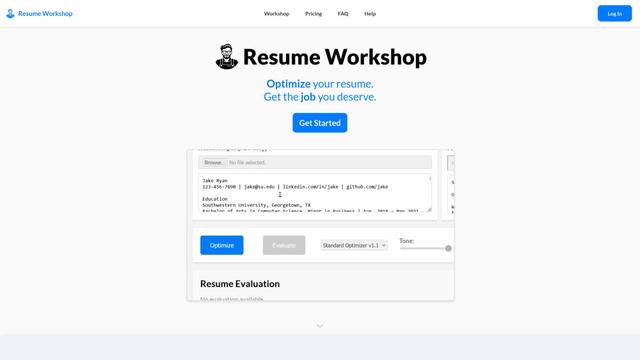
Resume Workshop is an AI-powered resume optimization platform that helps job seekers tailor their resumes with relevant keywords and phrases to match specific job postings.
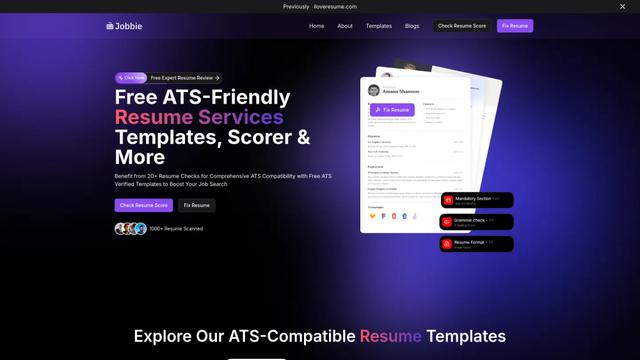
Jobbie
Jobbie is a comprehensive online platform offering free ATS-friendly resume services including resume checking, scoring, templates, and AI-powered optimization tools to help job seekers create professional resumes that pass through Applicant Tracking Systems.

Hiring Studio by Metaview
Hiring Studio by Metaview is a free AI-powered tool that helps recruiting teams generate customized interview questions with follow-up suggestions and detailed answer rubrics.
Popular AI Tools Like AI YC interview with Gstack agents
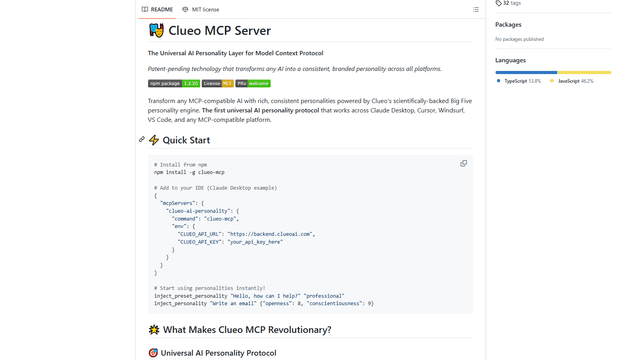
ClueoMCP
ClueoMCP is a universal AI personality layer that transforms any AI into a consistent, branded personality across all platforms using patent-pending technology and scientifically-backed Big Five personality traits.
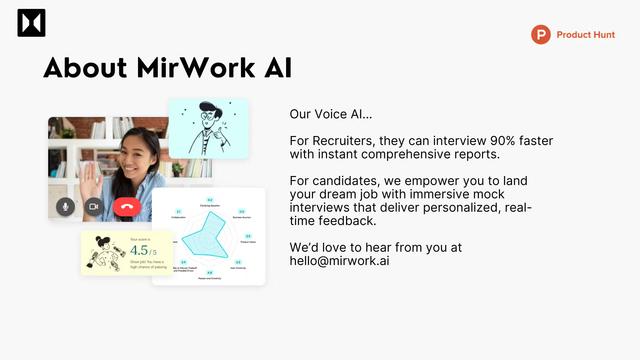
Quick Mock - AI interviewer for Any Job
Quick Mock is an AI-powered interview preparation tool that enables users to extract job descriptions from leading platforms and instantly conduct realistic mock interviews with real-time voice AI technology and comprehensive feedback.
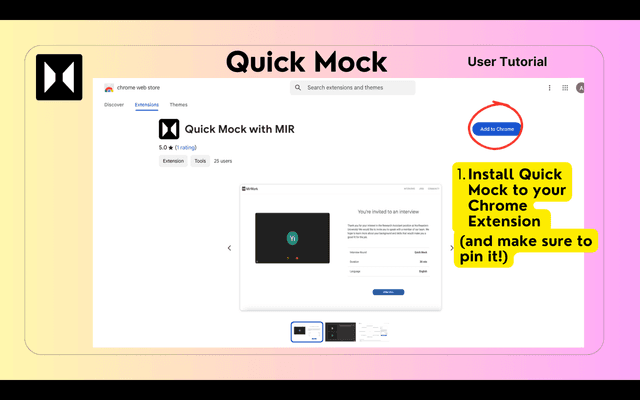
QuickMock 2.0 – AI for Hot Interviews
QuickMock 2.0 is an AI-powered interview preparation tool that instantly converts LinkedIn job descriptions into tailored mock interviews with real-time feedback and a comprehensive question bank from top companies.
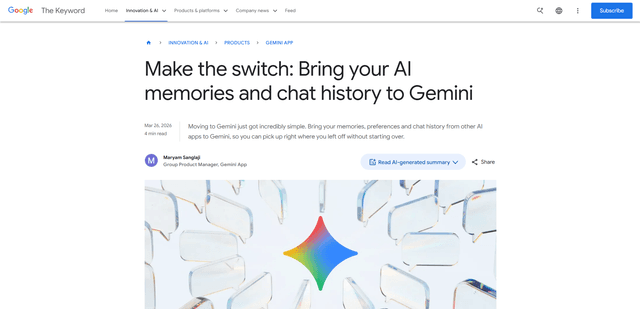
Google Gemini Memory Import
Google Gemini Memory Import is a new feature that allows users to seamlessly transfer their memories, preferences, and chat histories from other AI assistants to Gemini without starting from scratch.