
Fluree
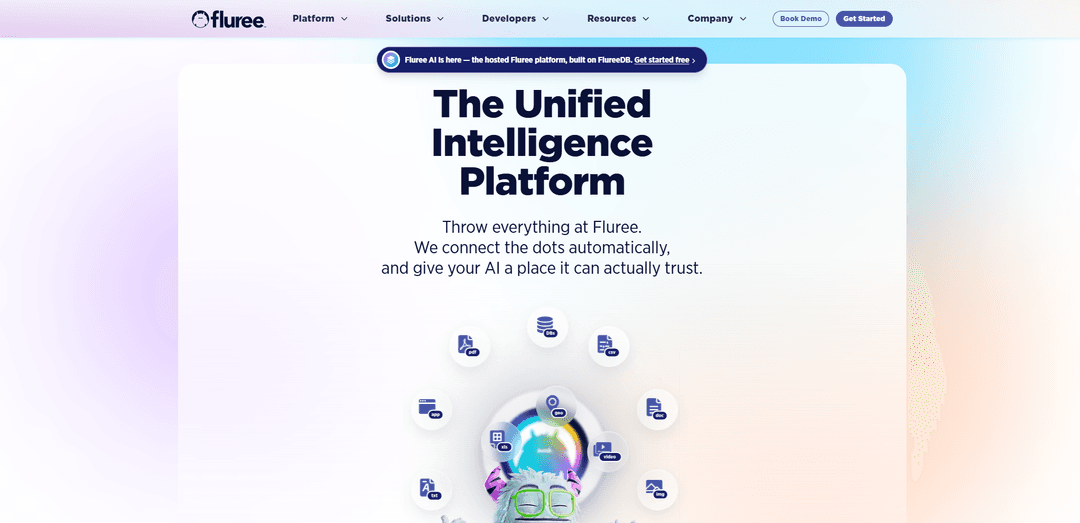
Fluree is an enterprise AI data platform built on a verifiable, temporal knowledge-graph database (FlureeDB) that unifies structured and unstructured data with linked-data standards, integrated search (vector/text/geo), and fine-grained access control for trustworthy AI and GraphRAG.
https://flur.ee/?ref=producthunt
Product Information
Updated:Aug 8, 2026
What is Fluree
Fluree is a data management and knowledge graph platform designed to turn raw, siloed data into trusted, queryable intelligence for enterprises. At its core is FlureeDB, a ledger-backed semantic graph database that emphasizes verifiability, temporal history, standards compliance (e.g., linked-data/JSON-LD), and data-centric governance. Fluree is positioned as an “AI-ready data” foundation—supporting use cases like enterprise knowledge graphs, golden records, entity resolution, and GraphRAG—delivered either via Fluree AI (a hosted platform) or via self-managed deployment options for developers.
Key Features of Fluree
Fluree is an enterprise AI data platform centered on a verifiable, standards-based knowledge graph database (FlureeDB/Fluree Core) that stores data as RDF/JSON-LD with complete change history, fine-grained policy controls, and git-like branching/merging. It connects and composes data across systems to create trusted, queryable graphs for analytics, search, GraphRAG, and AI agents, with integrated text/vector/geo search and multiple query options (SPARQL, GraphQL, and FlureeQL). Fluree also offers ingestion and transformation capabilities (e.g., Fluree Sense) to map legacy and siloed data into a universal ontology, clean it, resolve entities, and produce governed “golden records,” deployable anywhere (including serverless/hosted options) and integrable with MCP-enabled agent tools.
Verifiable semantic graph database: Stores meaning as linked data (RDF/JSON-LD) with temporal history of every change, standards compliance (SPARQL/OWL/SHACL), and cryptographic/digital-trust positioning for auditable, trustworthy knowledge graphs.
Data-centric security & policy enforcement: Fine-grained access control enforced at the data layer (down to triple-level controls), supporting safer direct querying and governed sharing across users, apps, and agents.
Git-like branching and merging: Supports git-style workflows for graph data—branch, test, and merge changes—useful for collaborative knowledge modeling, governed updates, and AI-agent memory/versioning.
Multi-modal search built in: Integrated vector, text (e.g., BM25), and geo search alongside graph queries to support enterprise AI search and GraphRAG without relying on external dependencies.
AI-ready ingestion, mapping, and mastering (Fluree Sense): Automates mappings from local formats to a universal ontology, transforms flat files into RDF, cleans legacy data, performs entity resolution, and produces reliable golden records for MDM-like outcomes.
Flexible query & integration surface: Supports SPARQL, GraphQL, and FlureeQL (including historical/block/time-travel queries and cross-ledger querying), plus tooling like CLI and MCP server to plug into agent/IDE ecosystems.
Use Cases of Fluree
Banking golden records & household intelligence: Unify multiple reporting/CRM systems, resolve entities, and create governed golden customer/household records (e.g., 330,000+ customers) to enable proactive banker outreach and trusted analytics.
Pharma data consolidation for faster analytics: Consolidate many warehouses into a governed semantic layer, reduce manual remediation costs, and accelerate new analytics use cases from months to weeks by standardizing data into an ontology-driven graph.
Financial services content intelligence portal: Automate tagging and improve discovery across large document collections (e.g., 10,000+ extracted documents), increasing trust in enterprise portals and enabling decision intelligence.
Media & advertising inventory and brand-safety search: Create a unified intelligence layer over DAM/MAM/CMS systems to query content by themes, events, or brand-safety needs with precise retrieval for packaging and monetization workflows.
Enterprise GraphRAG and conversational analytics: Ground LLM answers in explicit entity relationships (customer→contract→ticket, etc.) for higher-accuracy retrieval, traceability, and reduced hallucinations in chat/BI experiences.
Governed long-term memory for AI agents: Persist project facts, decisions, and preferences as a controlled graph (shareable via git) and expose it to MCP-capable tools (Claude Code, Cursor, etc.) for durable, policy-scoped agent memory.
Pros
Standards-first semantic graph (JSON-LD/RDF, SPARQL, OWL, SHACL) that keeps data portable and vendor-neutral.
Strong trust primitives: temporal history, verifiability posture, and fine-grained policy controls for governed sharing and auditing.
Built-in multi-modal retrieval (graph + text/vector/geo) well-suited for GraphRAG and enterprise AI search.
Flexible deployment options (minimal runtime, deploy anywhere, plus hosted/serverless offerings) and integrations (HTTP API, CLI, MCP).
Cons
Semantic/ontology-driven approach can require upfront modeling and governance work compared with simpler document/vector-only stacks.
Some triplestore-like expectations may differ depending on deployment and interfaces (e.g., workflows may rely on APIs/tooling rather than traditional admin panels).
Teams accustomed to property-graph systems may face a learning curve moving to RDF/JSON-LD and SPARQL-style patterns.
Advanced capabilities (entity resolution, automated mappings, enterprise support/features) may be tied to specific platform components or enterprise offerings.
How to Use Fluree
1) Choose how you want to run Fluree (hosted vs local): Option A: Use Fluree AI (hosted) to skip setup and start loading data immediately (Start Free at https://flur.ee/solo). Option B: Run FlureeDB locally for development/testing using Docker (recommended for quickest local start) or Homebrew/downloaded binary.
2) Start a local FlureeDB server (quick local setup): Pull the Fluree Docker image and start a Fluree server (see Quickstart: https://labs.flur.ee/docs/db/getting-started/quickstart-server). If you downloaded the binary instead, run it from the directory you downloaded it into using the default launch command described in the docs.
3) Understand what Fluree writes to disk (local installs): On first start, Fluree creates a data/ directory containing raft state and block files for each ledger/dataset. It also creates default_private_key.txt containing the unique private key for the root account. Subdirectories are organized by the ledger names you create. You can move/copy the data/ directory to another Fluree instance to keep your ledgers when upgrading versions.
4) Open the built-in AdminUI (local installs): Fluree includes a built-in AdminUI. With Fluree running locally, open your browser to localhost:[port] (the port you started Fluree on) to access the AdminUI for basic operations and exploration.
5) Create your first dataset/ledger: In the UI (or via API), create a new dataset/ledger. This becomes the container for your knowledge graph data and its full history. Name it clearly because Fluree uses that name for on-disk subdirectories (local installs).
6) Load data into Fluree (structured and unstructured): You can connect sources like CSV, APIs, Postgres, Snowflake, Salesforce, etc., and ingest data as-is (no schema migration). For structured onboarding at scale, Fluree Sense can auto-discover, clean/format into JSON-LD, and load into Fluree’s trusted data platform.
7) Import from files (example workflow: Excel/CSV): Use Fluree’s import workflow to bring in Excel/CSV data. In the guided import experience, you can start from a model file that defines the structure, then import the data files. Fluree will create a semantic data model from imported data that you can explore afterward.
8) Explore the semantic data model (why it matters): After importing, Fluree automatically creates a semantic data model. Use the model explorer to view classes and properties. This model is machine-readable and helps LLMs generate correct SPARQL queries for GraphRAG and conversational analytics.
9) Query your data using standards (SPARQL) or FlureeQL: Fluree supports SPARQL (and other interfaces) for semantic graph querying. It also provides FlureeQL, a JSON-based query format that exposes features beyond traditional endpoints, including historical and block queries.
10) Run time-travel queries (history and block queries): Fluree is temporal and verifiable: you can query data at a point in time or across a time range. Use the HTTP API endpoints /history and /block by POSTing JSON queries (often in FlureeQL) to retrieve historical states and block-level information.
11) Use reasoning to derive implicit relationships: Enable semantic reasoning features such as RDFS subclass reasoning, OWL 2 RL forward-chaining, and user-defined Datalog rules to automatically derive transitive/inverse relationships—turning implicit structure into first-class queryable facts.
12) Enforce security at the data layer: Implement access control policies directly in the data tier so users (and AI models/agents) only see authorized data. Fluree emphasizes embedded read/write access control and verifiable data changes over time.
13) Build GraphRAG and conversational analytics on top of the graph: Use Fluree’s knowledge graph as the grounding layer for AI. Because retrieval traverses entity relationships (not just text similarity), answers can trace back to exact records/rows. This supports GraphRAG, enterprise AI search, and conversational analytics.
14) Connect AI tools via MCP (optional): If you use MCP-capable agents/IDEs (e.g., Claude Code, Cursor), plug them into Fluree using Fluree MCP (https://www.npmjs.com/package/@fluree/fluree-mcp-server) so the agent reasons over the same governed graph.
15) Operate and iterate (upgrade safely, scale later): For local deployments, keep your ledgers by copying/moving the data/ directory when upgrading Fluree versions. Start with a single instance, then scale as needed following Fluree deployment guidance (crawl/walk/run approach) and cloud integrations (e.g., AWS) when moving toward production.
Fluree FAQs
Fluree is an enterprise AI data platform that turns raw data into trusted, queryable knowledge graphs so organizations can connect entities and relationships with governance and traceability built in.
Fluree Video
Popular Articles

Vosko AI: Localize and Dub Videos for Global Audiences
Oct 15, 2026
Atoms: A Multi-Agent AI Platform That Transforms Ideas into Launch-Ready Products
Oct 13, 2026
Nano Banana SBTI: What It Is, How It Works, and How to Use It in 2026
Apr 15, 2026
Atoms Review — The AI Product Builder Redefining Digital Creation in 2026
Apr 10, 2026
Latest AI Tools Similar to Fluree
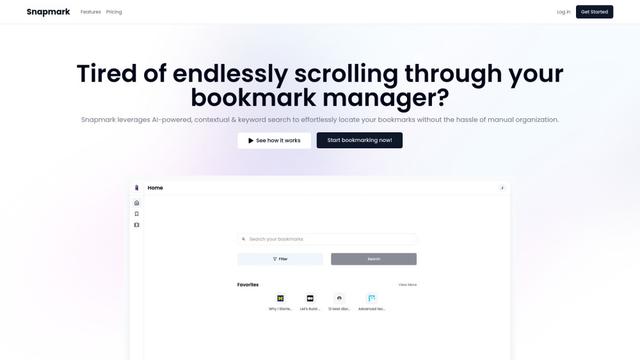
Snapmark
Snapmark is an AI-powered search engine for bookmarks that allows users to save, search, and organize websites, images, and text without manual tagging or categorization.
Uměl.cz
Uměl.cz is a Czech AI-powered search engine that provides intelligent and contextual answers to user queries.
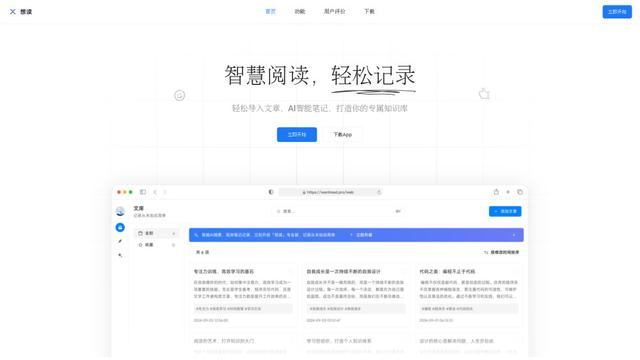
想读 (WantRead)
想读(WantRead) is an AI-powered reading and note-taking platform that helps users easily import, read, annotate and build their personal knowledge base.

PodExtra AI
PodExtra AI is an advanced AI-powered podcast tool that transforms podcast content into digestible formats through transcripts, summaries, mind maps, outlines, highlights and takeaways.
Popular AI Tools Like Fluree
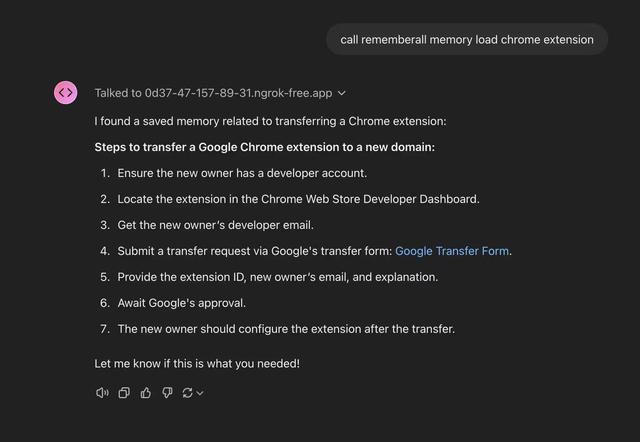
Rememberall
Rememberall is a secure, open-source long-term memory solution that enables AI applications and GPT models to maintain persistent memory across conversations through semantic search and vector storage capabilities.
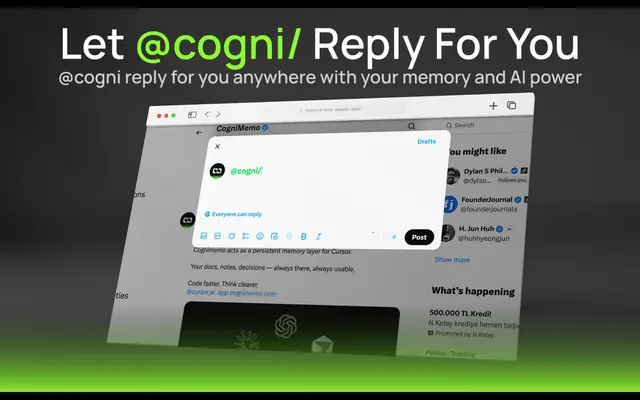
CogniMemo Extension
CogniMemo is a browser extension that adds long-term memory capabilities to AI tools like ChatGPT, Claude, Gemini, and DeepSeek by enabling context-aware conversations and knowledge management through saved notes and past chats.
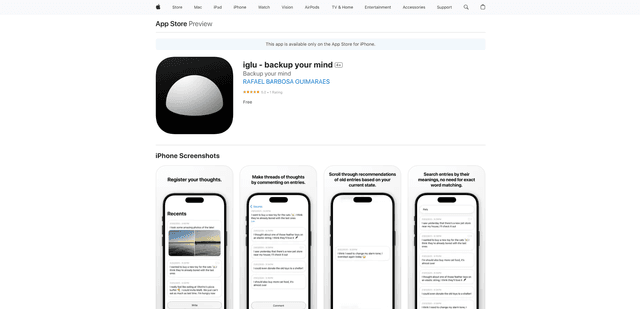
iglu
Iglu is a private, AI-powered micro-journaling app that helps users record, organize, and revisit their thoughts, memories, and ideas through text and media entries with intelligent search and recommendation features.
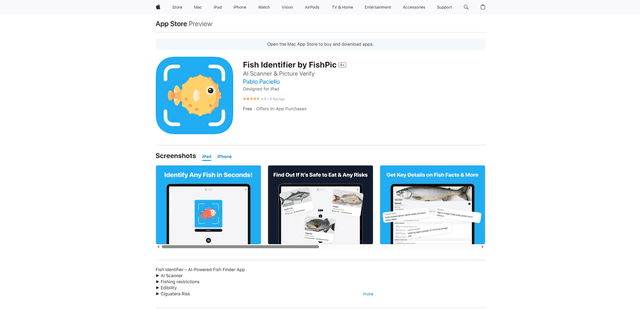
FishPic
FishPic is an AI-powered fish identification app that instantly recognizes fish species from photos while providing comprehensive information about edibility, regulations, and recipes.