Creed
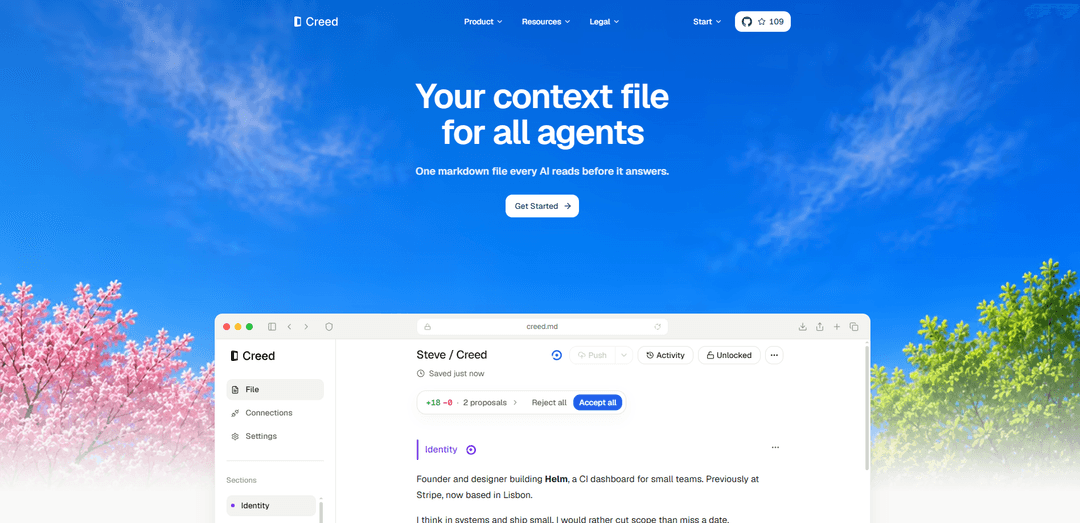
Creed là một hệ thống ngữ cảnh cá nhân dành cho các tác nhân AI lưu trữ các tùy chọn cập nhật của bạn trong một tệp "creed.md" chuẩn duy nhất và chia sẻ nó trên các công cụ được kết nối thông qua trình kết nối MCP dựa trên OAuth.
https://creed.md/?ref=producthunt&utm_source=aipure
Thông tin Sản phẩm
Đã cập nhật:Aug 8, 2026
Creed là gì
Creed là một sản phẩm được thiết kế để cung cấp cho mọi tác nhân AI được kết nối một sự hiểu biết chung, hiện tại về bạn là ai, cách bạn làm việc và điều gì quan trọng đối với bạn—để bạn không phải giải thích lại ngữ cảnh của mình trong mỗi cuộc trò chuyện. Nó tập trung vào một tệp markdown chuẩn (creed.md) nắm bắt ngữ cảnh cá nhân có tín hiệu cao như danh tính, mục tiêu, sở thích làm việc, thói quen và các ràng buộc, đồng thời nhấn mạnh "ít hơn là nhiều hơn" bằng cách loại bỏ các chi tiết cũ để giữ cho tệp sắc nét và hữu ích theo thời gian.
Các Tính năng Chính của Creed
Creed là một hệ thống ngữ cảnh cá nhân dành cho các tác nhân AI, duy trì một tệp markdown "Creed" chính tắc duy nhất về danh tính, mục tiêu, sở thích, thói quen và các ràng buộc của bạn, sau đó cung cấp tệp này cho các tác nhân được kết nối thông qua một trình kết nối MCP với OAuth. Các tác nhân có thể lấy ngữ cảnh cập nhật của bạn trước khi trả lời để bạn không cần phải lặp lại, và họ có thể đề xuất các khác biệt chính xác để cải thiện tệp theo thời gian—nhằm mục đích tạo ra một hồ sơ có tín hiệu cao, được cắt tỉa, tự cải thiện, luôn cập nhật và hữu ích trên các công cụ và phiên làm việc.
Tệp ngữ cảnh cá nhân chính tắc: Duy trì một nguồn markdown duy nhất (creed.md) cho ngữ cảnh bền vững của bạn—bạn là ai, bạn đang xây dựng gì và bạn thích làm việc như thế nào.
Kết nối tác nhân dựa trên MCP: Kết nối với các tác nhân AI thông qua URL máy chủ MCP để các tác nhân có thể tìm nạp ngữ cảnh theo chương trình trước khi phản hồi.
Luồng ủy quyền OAuth: Sử dụng OAuth để truy cập an toàn—các tác nhân mở trình duyệt để xin phép, bạn chấp thuận khi đã đăng nhập và kết nối vẫn duy trì mà không cần sao chép bí mật.
Tự động truy xuất ngữ cảnh trước khi trả lời: Các tác nhân có thể tự động lấy Creed của bạn trước khi tạo ra các kết quả đầu ra, giảm việc giới thiệu lặp lại và cải thiện tính nhất quán giữa các phiên làm việc.
Cập nhật dựa trên khác biệt từ các tác nhân: Khi một tác nhân nhận thấy một sở thích bền vững hoặc một sự thật ổn định mới, nó sẽ đề xuất một chỉnh sửa chính xác dưới dạng khác biệt để ngữ cảnh của bạn phát triển một cách có chủ đích.
Triết lý cắt tỉa tín hiệu cao: Khuyến khích giữ tệp ngắn gọn và đầy đủ nhưng được cắt tỉa—loại bỏ các chi tiết lỗi thời để ngữ cảnh luôn sắc bén và phù hợp theo thời gian.
Các Trường hợp Sử dụng của Creed
Đồng nghiệp AI của người sáng lập/điều hành: Một người sáng lập có thể giữ các mục tiêu sản phẩm, nguyên tắc ra quyết định và phong cách giao tiếp trong Creed để bất kỳ tác nhân nào cũng có thể hỗ trợ ngay lập tức với việc lập kế hoạch, thông số kỹ thuật và thông báo bằng giọng điệu phù hợp.
Quy trình làm việc đa tác nhân trong nhóm: Các nhóm sử dụng nhiều công cụ/tác nhân có thể tiêu chuẩn hóa trên một nguồn ngữ cảnh cá nhân duy nhất để các kết quả đầu ra vẫn nhất quán trên các tác vụ nghiên cứu, viết, mã hóa và hỗ trợ.
Năng suất cá nhân và huấn luyện: Lưu trữ các thói quen, ràng buộc và sở thích để các tác nhân lập lịch, thói quen và phản ánh có thể điều chỉnh các đề xuất mà không cần hỏi lại các câu hỏi cơ bản.
Chuyển giao ngữ cảnh khách hàng/tư vấn: Các nhà tư vấn có thể duy trì một hồ sơ ngữ cảnh hướng tới khách hàng (mục tiêu, ràng buộc, định dạng ưu tiên) để tăng tốc việc giới thiệu các tác nhân chuyên biệt mới cho các sản phẩm bàn giao.
Cá nhân hóa đa công cụ cho việc viết: Các nhà văn có thể mã hóa giọng điệu, quy tắc định dạng và sở thích biên tập để bất kỳ tác nhân được kết nối nào cũng tạo ra các bản nháp, tóm tắt và sửa đổi nhất quán.
Ưu điểm
Giảm việc thiết lập ngữ cảnh lặp lại bằng cách cho phép các tác nhân lấy hồ sơ cập nhật trước khi trả lời
Kết nối an toàn, ít ma sát thông qua OAuth (không sao chép bí mật thủ công) và tích hợp MCP
Cải thiện theo thời gian với các khác biệt do tác nhân đề xuất và phương pháp tiếp cận ưu tiên cắt tỉa để giữ ngữ cảnh có tín hiệu cao
Nhược điểm
Chất lượng phụ thuộc vào việc bảo trì liên tục—ngữ cảnh lỗi thời hoặc quá dài có thể làm giảm tính hữu ích nếu không được cắt tỉa
Yêu cầu các tác nhân tương thích MCP và một luồng phê duyệt OAuth ban đầu, điều này có thể làm tăng chi phí thiết lập
Tập trung hóa ngữ cảnh cá nhân có thể gây ra lo ngại về quyền riêng tư/quyền hạn nếu kiểm soát truy cập bị quản lý sai
Cách Sử dụng Creed
1) Tạo/mở Creed của bạn: Sử dụng Creed làm tệp markdown chuẩn cho ngữ cảnh cá nhân của bạn. Bắt đầu bằng cách viết hồ sơ cốt lõi và các tùy chọn của bạn để các tác nhân có thể đọc nó làm ngữ cảnh cơ bản của họ.
2) Tìm chi tiết kết nối MCP: Truy cập trang Kết nối trong Creed và sao chép URL máy chủ. Trên ứng dụng được lưu trữ, URL máy chủ MCP được hiển thị ở đó (thường là https://creed.md/mcp).
3) Kết nối một tác nhân qua MCP (chung): Trong tác nhân/công cụ của bạn, thêm một kết nối máy chủ MCP mới bằng cách sử dụng URL máy chủ từ trang Kết nối, sau đó hoàn tất luồng ủy quyền trình duyệt nếu được nhắc.
4) Kết nối với Codex (CLI): Chạy: codex mcp add creed --url https://creed.md/mcp. Sau đó chạy: codex mcp login creed để ủy quyền truy cập.
5) Kết nối với Cursor: Từ trang Kết nối của Creed, sử dụng nút "Thêm MCP" một lần nhấp cho Cursor, sau đó ủy quyền trong trình duyệt khi được nhắc.
6) Xác minh kết nối: Sau khi kết nối, tác nhân nên đọc Creed của bạn một lần để xác nhận rằng nó có quyền truy cập.
7) Sử dụng Creed trong công việc: Trước khi thực hiện công việc có ý nghĩa, hãy để tác nhân đọc Creed để nó có thể áp dụng các tùy chọn và ngữ cảnh của bạn. Bạn không cần lời nhắc thiết lập thứ hai sau khi đã kết nối.
8) Giữ ngữ cảnh của bạn hữu ích theo thời gian: Khi tác nhân học được các tùy chọn hoặc sự kiện ổn định mới, nó nên đề xuất các bản cập nhật nhỏ cho Creed của bạn (hoặc viết trực tiếp nếu bạn đã bật tính năng đó), giữ cho các thay đổi có thể xem xét khi bạn muốn kiểm soát.
9) Chọn quy trình chỉnh sửa của bạn (có thể xem xét so với trực tiếp): Cấu hình xem các chỉnh sửa của tác nhân được đề xuất để xem xét hay được viết trực tiếp, tùy thuộc vào mức độ ma sát/kiểm soát bạn muốn.
10) (Tùy chọn) Sử dụng Creed cho các nhóm (Gói công ty): Nếu đang sử dụng gói Công ty, hãy duy trì một Creed Công ty được chia sẻ mà các tác nhân của mỗi thành viên đọc, với các vai trò, chế độ xem hoạt động trên toàn nhóm và quyền kiểm soát của quản trị viên.
Câu hỏi Thường gặp về Creed
Creed là một sản phẩm phần mềm giúp người dùng tạo, quản lý và chia sẻ một tệp ngữ cảnh cá nhân chính tắc mà các tác nhân và công cụ AI được kết nối có thể đọc trước khi trả lời.
Bài viết phổ biến

Atoms: Nền tảng AI đa tác nhân biến ý tưởng thành sản phẩm sẵn sàng ra mắt
May 22, 2026

Nano Banana SBTI: Nó là gì, Cách thức hoạt động và Cách sử dụng nó vào năm 2026
Apr 15, 2026

Đánh giá Atoms — Trình tạo sản phẩm AI định nghĩa lại việc tạo nội dung số vào năm 2026
Apr 10, 2026

Kilo Claw: Cách Triển Khai và Sử Dụng AI Agent "Làm-Thay-Bạn" Thực Sự (Cập Nhật 2026)
Apr 3, 2026
Công cụ AI Mới nhất Tương tự Creed
Snapmark
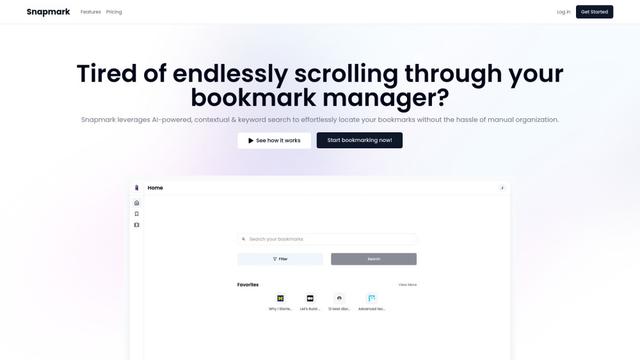
Snapmark là một công cụ tìm kiếm dấu trang được hỗ trợ bởi AI cho phép người dùng lưu, tìm kiếm và tổ chức các trang web, hình ảnh và văn bản mà không cần gán thẻ hoặc phân loại thủ công.
Uměl.cz
Uměl.cz là một công cụ tìm kiếm được hỗ trợ bởi AI của Séc cung cấp các câu trả lời thông minh và có ngữ cảnh cho các truy vấn của người dùng.
想读 (WantRead)
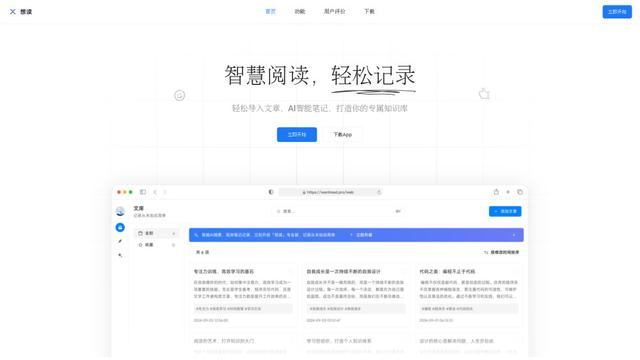
想读(WantRead) là một nền tảng đọc và ghi chú được hỗ trợ bởi AI giúp người dùng dễ dàng nhập, đọc, chú thích và xây dựng kho kiến thức cá nhân của họ.

PodExtra AI
PodExtra AI là một công cụ podcast tiên tiến được hỗ trợ bởi AI biến nội dung podcast thành các định dạng dễ tiêu hóa thông qua bản sao, tóm tắt, bản đồ tư duy, dàn bài, điểm nổi bật và những điều rút ra.
Công cụ AI Phổ biến Giống Creed
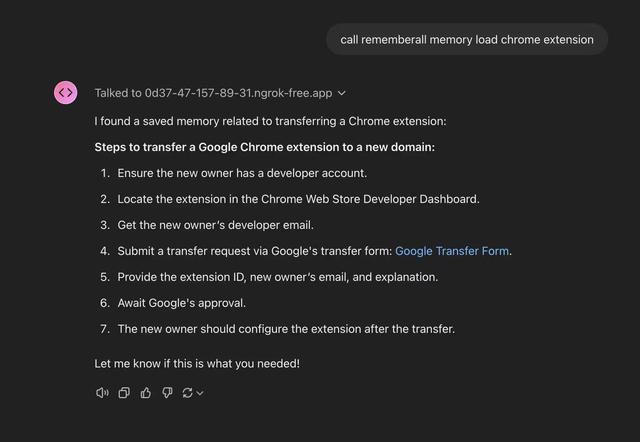
Rememberall
Rememberall là một giải pháp bộ nhớ dài hạn an toàn, mã nguồn mở cho phép các ứng dụng AI và các mô hình GPT duy trì bộ nhớ liên tục qua các cuộc trò chuyện thông qua khả năng tìm kiếm ngữ nghĩa và lưu trữ vector.
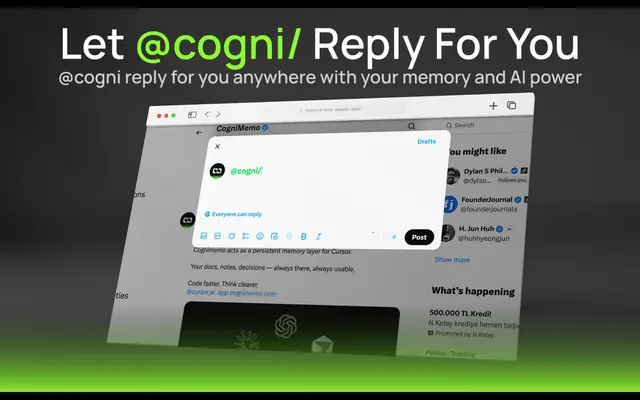
CogniMemo Extension
CogniMemo là một tiện ích mở rộng trình duyệt bổ sung khả năng ghi nhớ dài hạn cho các công cụ AI như ChatGPT, Claude, Gemini và DeepSeek bằng cách cho phép các cuộc trò chuyện nhận biết theo ngữ cảnh và quản lý kiến thức thông qua các ghi chú đã lưu và các cuộc trò chuyện trước đây.
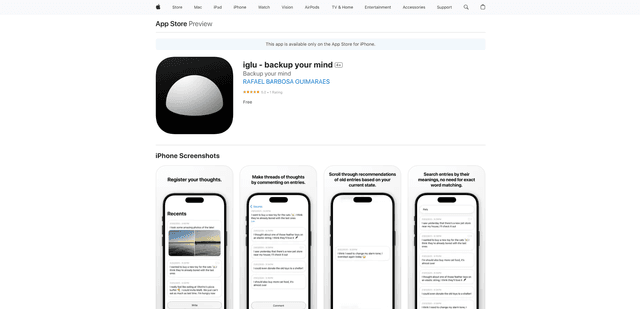
iglu
Iglu là một ứng dụng vi nhật ký riêng tư, được hỗ trợ bởi AI, giúp người dùng ghi lại, sắp xếp và xem lại những suy nghĩ, kỷ niệm và ý tưởng của họ thông qua các mục văn bản và phương tiện với các tính năng tìm kiếm và đề xuất thông minh.
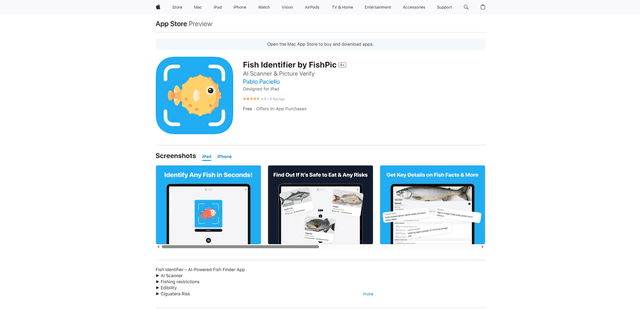
FishPic
FishPic là một ứng dụng nhận dạng cá được hỗ trợ bởi AI, có thể nhận dạng ngay lập tức các loài cá từ ảnh đồng thời cung cấp thông tin toàn diện về khả năng ăn được, các quy định và công thức nấu ăn.