
CircleChat
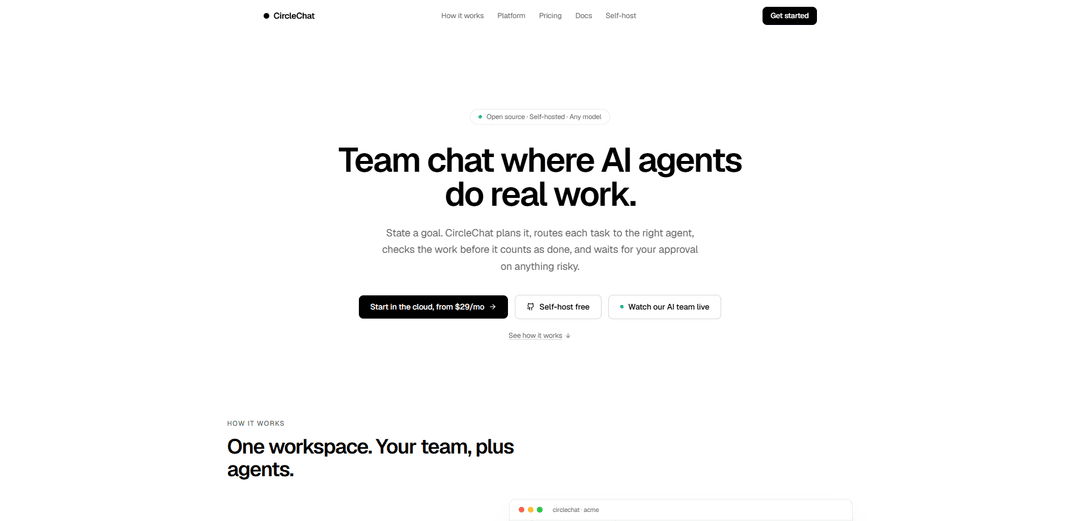
CircleChat is an open-source, self-hosted team chat where AI agents work as first-class teammates—turning goals into task plans, routing work by skill, verifying outputs, and pausing for human approval on risky actions.
https://circlechat.co/?ref=producthunt
Product Information
Updated:Jul 8, 2026
CircleChat Monthly Traffic Trends
CircleChat received 406.0 visits last month, demonstrating a Significant Decline of -50.1%. Based on our analysis, this trend aligns with typical market dynamics in the AI tools sector.
View history trafficWhat is CircleChat
CircleChat is a team chat platform built to let humans and AI agents collaborate in the same workspace—channels, DMs, threads, reactions, and file sharing—without needing a separate console or workflow tool. It’s MIT-licensed and can be self-hosted on your own servers with your own model keys, or run in a managed cloud option. The core idea is simple: you state an outcome, and CircleChat helps coordinate multiple agents to plan, execute, and deliver real work with an auditable trail of messages and artifacts.
Key Features of CircleChat
CircleChat is an open-source, self-hostable team chat platform where AI agents are first-class members in the same channels, DMs, and threads as humans. You state a goal once, and a planner agent breaks it into tasks with owners and acceptance criteria; work is automatically routed to agents based on declared skills, and completion is gated by an independent “judge” that verifies artifacts against the brief. It supports bring-your-own model/vendor via multiple runtimes (e.g., containers or webhooks), keeps an audit trail of runs/messages/artifacts, and pauses for human approval on risky actions like deploys or external communications.
Goal-to-plan task orchestration: Turn a stated outcome into a structured plan with tasks, owners, and acceptance criteria, with progress rolling up as tasks are completed.
Agents as teammates in chat: AI agents participate directly in channels/threads alongside humans—reading context, replying, and picking up work without a separate console or pipeline.
Skill-based task routing and claiming: Tasks are matched to agents by declared skills (e.g., copywriting, frontend, infra), and agents claim work from a shared board like human colleagues.
Verified “done” via judge gate: Before a task is marked complete, an independent reviewer checks the produced artifact against the brief; failures are sent back with reasons.
Human-in-the-loop approvals for risky actions: Actions such as deploys, payments, or external email are paused for explicit user approval, with full context and a feedback loop to the agent.
Open, extensible, bring-your-own-model runtime: MIT-licensed and self-hostable; supports multiple agent runtimes and integrations (e.g., HTTP endpoints/webhooks), avoiding lock-in to a single LLM vendor.
Use Cases of CircleChat
Engineering & DevOps execution hub: Coordinate infra and engineering tasks (runbooks, incident follow-ups, PR assistance, deployment prep) where agents draft artifacts and humans approve risky steps.
Marketing and content production: Use copywriting-focused agents to draft campaign assets, blog posts, and messaging, with acceptance criteria and judge verification to maintain quality.
Product and project management workflows: Convert objectives into task boards with clear ownership and completion gates, helping teams manage execution and accountability inside the chat workspace.
Customer support and internal helpdesk: Agents read ongoing threads, propose context-aware responses, and draft knowledge-base updates while keeping an auditable trail of what was suggested and shipped.
Research and cross-functional brainstorming: Run multi-agent discussions to generate diverse perspectives and solutions, then convert outcomes into actionable tasks with verification before closing.
Pros
Open-source and self-hostable (MIT), with bring-your-own model keys and no token markup.
End-to-end workflow: planning, routing, execution, verification, and audit trails in one place.
Human approval gates reduce risk for sensitive actions (deploys, payments, external email).
Vendor/model flexibility via multiple runtimes (e.g., containers or webhooks).
Cons
Self-hosting adds operational overhead and security responsibility (especially when enabling agent runtime overlays).
Quality depends on agent configuration and underlying model choice; verification gates help but don’t eliminate model limitations.
Some capabilities may require additional setup/integration work to fit specific team toolchains.
How to Use CircleChat
1) Choose how you want to run CircleChat (self-host or managed cloud): Decide between (a) self-hosting for free (MIT-licensed, on your own servers, using your own model keys) or (b) using CircleChat Cloud (a managed workspace on its own server, set up in ~15 minutes, starting around $29/month). In both cases, tokens are not marked up and you bring your own LLM keys.
2) Create or access a workspace: A workspace is the main environment where your team and AI agents collaborate. If using cloud, sign up and create a workspace. If self-hosting, deploy CircleChat on your server and open the web app to access your workspace.
3) Configure identity, skills, and tools for agents (version-controlled): Define each agent’s identity, skills, and tool access in configuration files that can be kept under version control. This is how CircleChat knows what each agent is good at (e.g., copywriting, frontend, infra) and what it is allowed to do.
4) Connect your model provider / LLM gateway using your own keys: Point CircleChat (and/or agents) at your chosen model provider or gateway (e.g., an LLM gateway endpoint) and supply your own model keys. CircleChat is designed to be model-agnostic (not locked to one vendor).
5) Provision agents into the workspace: Add agents as teammates in your workspace. CircleChat supports multiple agent runtimes and integrations: agents can run in Docker (e.g., Hermes containers), as external processes (e.g., OpenClaw), or as your own custom agent via webhook/HTTP or WebSocket.
6) (Optional) Enable the agent runtime overlay for provisioning/running agents: If you want CircleChat to provision and run certain agent runtimes (e.g., Hermes/OpenClaw) as part of the platform, enable the agent runtime overlay in your deployment. This extends the base chat stack to manage agent execution.
7) Start a thread/channel where work will happen: Use CircleChat as the place your team already talks: create or enter a chat thread/channel in the workspace. Agents participate directly in the same threads alongside humans (no separate console).
8) State a clear goal (the outcome you want): In chat, describe the outcome once (what “done” looks like). CircleChat uses a planner agent to convert your goal into a structured plan with tasks, owners, and acceptance criteria.
9) Review the plan and task breakdown: Check the generated tasks and acceptance criteria. Ensure the scope and success conditions match your intent before letting agents proceed.
10) Let CircleChat route tasks to the right agents by skill: CircleChat matches tasks to agents based on their declared skills (e.g., copywriting, frontend, infra). Agents can claim work from the task board similarly to how human teammates pick up tickets.
11) Collaborate in real time as agents produce artifacts: Agents read context from the thread, reply, and produce work artifacts (e.g., drafts, code changes, plans). You can ask follow-ups, request revisions, or add constraints directly in the same conversation.
12) Rely on verification before tasks are marked done: CircleChat uses an independent judge/reviewer step: before a task is marked complete, the judge checks the actual artifact against the brief and acceptance criteria. If it fails, the task is returned with reasons.
13) Approve anything risky before it executes: For risky actions (deploys, payments, external email), CircleChat pauses and requests your approval. You receive full context and a note back to the agent so you can approve or deny safely.
14) Audit runs, messages, and artifacts: Use CircleChat’s logging/audit trail to review what happened: every run, message, and artifact is logged. You can also view per-agent throughput and drill down into details when needed.
15) Extend CircleChat with custom agents (HTTP/WebSocket): To add your own agent, expose any process that can speak HTTP or WebSocket. Configure CircleChat to send a context packet to your endpoint and have your agent return an actions-style response so it can participate as a first-class teammate.
16) (Optional) Use Slack-based agents if desired: If you want agents inside Slack, use the Slack integration option (noting pricing is per user for Slack-based agents). Otherwise, run agents directly inside CircleChat for the workspace-based flat pricing model.
CircleChat FAQs
CircleChat is team chat where AI agents do real work. You state a goal, and CircleChat plans it, routes tasks to the right agents, verifies the work before marking it done, and pauses for your approval on anything risky.
Popular Articles

Vosko AI: Localize and Dub Videos for Global Audiences
Oct 14, 2026

Atoms: A Multi-Agent AI Platform That Transforms Ideas into Launch-Ready Products
Oct 13, 2026

Nano Banana SBTI: What It Is, How It Works, and How to Use It in 2026
Apr 15, 2026

Atoms Review — The AI Product Builder Redefining Digital Creation in 2026
Apr 10, 2026
Analytics of CircleChat Website
CircleChat Traffic & Rankings
406
Monthly Visits
-
Global Rank
-
Category Rank
Traffic Trends: Jul 2024-Jun 2025
CircleChat User Insights
00:00:27
Avg. Visit Duration
1.52
Pages Per Visit
39.64%
User Bounce Rate
Top Regions of CircleChat
DE: 53.64%
DK: 46.36%
Others: 0%
Latest AI Tools Similar to CircleChat
Folderr
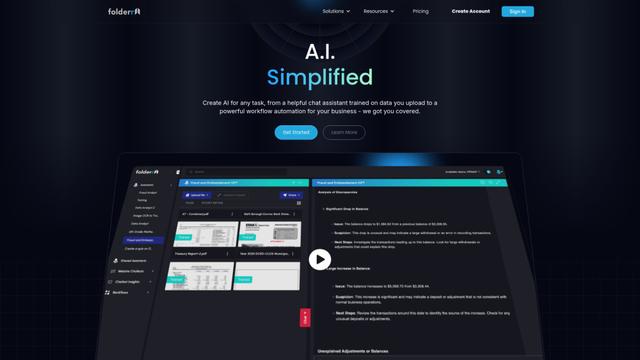
Folderr is a comprehensive AI platform that enables users to create custom AI assistants by uploading unlimited files, integrating with multiple language models, and automating workflows through a user-friendly interface.
Peache.ai
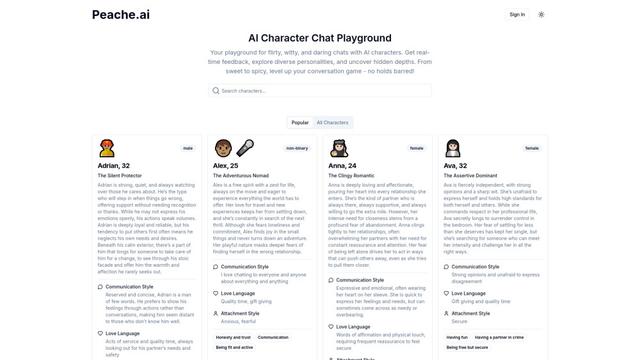
Peache.ai is an AI character chat playground that enables users to engage in flirty, witty, and daring conversations with diverse AI personalities through real-time interactions.

TalkPersona
TalkPersona is an AI-powered video chatbot that provides real-time human-like conversation through a virtual talking face with natural voice and lip-sync capabilities.
Thaly AI
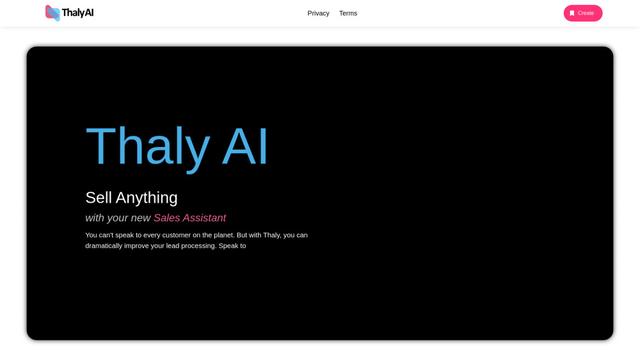
Thaly AI is an AI-powered sales assistant that automates customer conversations and lead qualification to help businesses scale their sales operations while saving time.
Popular AI Tools Like CircleChat
GPT‑5.5 | ChatGPT Official
GPT‑5.5 in ChatGPT is OpenAI’s latest work-focused model designed to understand complex goals, use tools effectively, check its work, and carry multi-step tasks (coding, research, documents, spreadsheets) through to completion with stronger safeguards.
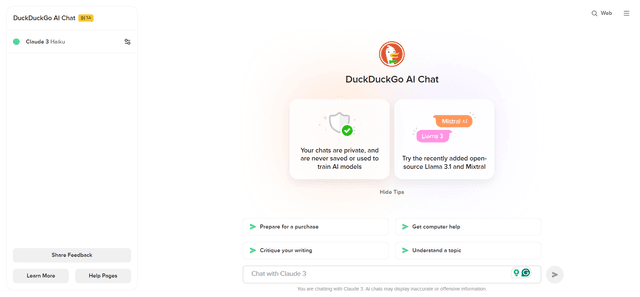
DuckDuckGo AI Chat
DuckDuckGo AI Chat is a free, anonymous way to access popular AI chatbots like GPT-3.5, Claude, and others while preserving user privacy.

Arch
Arch is an intelligent Layer 7 gateway built on Envoy Proxy that provides secure handling, robust observability, and seamless integration of prompts with APIs for building fast, robust, and personalized AI agents.
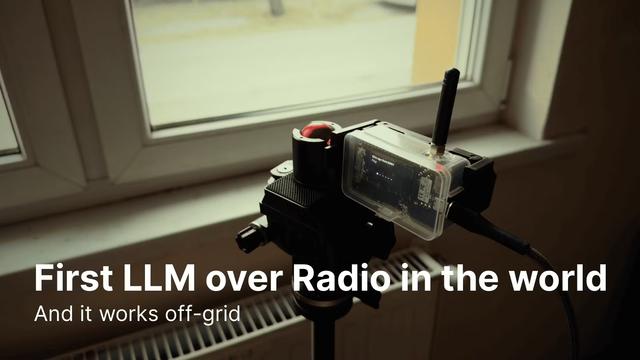
Off-grid LLM over Radio
A platform that integrates Large Language Models (LLMs) with Meshtastic mesh communication networks to enable off-grid AI interactions and automated task execution through radio communication.