AI Visibility
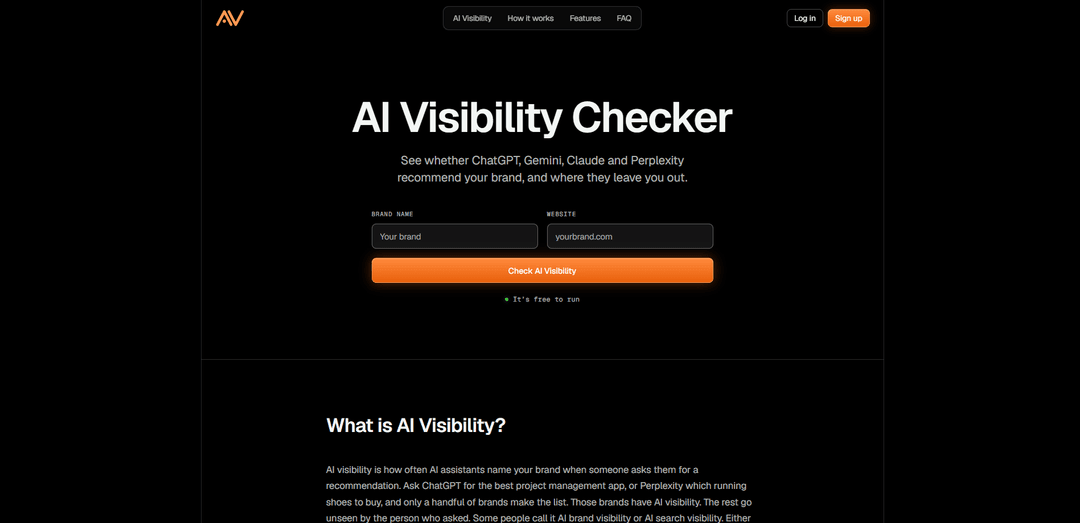
AI Visibility is a free, multi-model checker that measures how often ChatGPT, Gemini, Claude, and Perplexity name your brand in recommendation answers, with a clear score, per-platform breakdowns, cited sources, and prompt-level gap insights.
https://aivisibility.pro/?ref=producthunt
Product Information
Updated:Jul 15, 2026
What is AI Visibility
AI Visibility is a tool for measuring whether AI assistants actually mention your brand when people ask for recommendations in your category. Instead of focusing on traditional Google rankings, it tracks “AI brand visibility” (also called AI search visibility): when an assistant generates an answer, do you get named or not? The platform is designed to make this shift measurable by producing a repeatable AI visibility score, showing results by assistant, and surfacing the specific prompts and competitive context behind your visibility (or lack of it).
Key Features of AI Visibility
AI Visibility is a browser-based tool for checking how often major AI assistants (ChatGPT, Gemini, Claude, and Perplexity) mention your brand when users ask real, customer-like recommendation prompts. It generates relevant prompts, evaluates each assistant’s answers for brand mentions and cited sources, and returns an AI visibility score with per-platform breakdowns, prompt-level gaps, competitor comparisons, and shareable reports—so teams can track changes over time and prioritize what to fix to increase AI-driven recommendations.
Multi-model visibility checking: Runs one scan across ChatGPT, Gemini, Claude, and Perplexity to show where your brand is (or isn’t) mentioned without manual testing.
AI visibility score + history tracking: Provides a repeatable score you can use as a baseline and monitor over time by revisiting past checks to see movement after launches or content updates.
Prompt-level gap finder: Shows the exact prompts where your brand never appears, helping you pinpoint missed demand and prioritize targeted improvements.
Cited sources intelligence: Displays which domains the assistants cite alongside answers, revealing where the models are pulling information from and where you may need coverage.
Competitor comparison: Lets you run the same checks on competing brands to see who AI recommends instead of you and which sources support their visibility.
Fast, no-setup, shareable reports: Works with just a brand name and website, returns results in seconds, and produces a link you can share with teammates or clients.
Use Cases of AI Visibility
SaaS category recommendation monitoring: Track whether your product is named when users ask assistants for “best [category] software,” then use missing prompts and cited sources to guide positioning and content work.
Ecommerce/DTC product discovery checks: See if your brand appears when shoppers ask AI what to buy (e.g., “best running shoes”), identify which competitors replace you, and focus on the sources AI trusts.
Local services visibility auditing: Evaluate whether AI recommends your business for local-intent queries and monitor changes over time as you improve your online presence and consistency.
Agency client reporting and opportunity finding: Generate quick, shareable visibility reports for prospects/clients, highlight prompt gaps and competitor wins, and build a prioritized action plan.
SEO teams expanding into AI visibility: Complement rank tracking by measuring brand mentions in AI answers, using per-platform results to understand differences between assistants and where to focus next.
Pros
Free to run and quick to generate results, making it easy to check frequently.
Covers multiple major assistants in one report with per-platform breakdowns.
Action-oriented outputs (prompt gaps, competitor replacements, cited sources) help prioritize what to fix.
Cons
Limited to the specific assistants listed (ChatGPT, Gemini, Claude, Perplexity), so it may not reflect visibility on other AI surfaces.
A single score may oversimplify nuanced outcomes (e.g., being cited vs. being recommended) without deeper context.
Results depend on the selected prompt set and how assistants respond at the time of checking, which can fluctuate.
How to Use AI Visibility
1. Open the AI Visibility Checker: Go to https://aivisibility.pro/ in any browser (desktop or mobile) to start a new check.
2. Enter your brand details: Input your brand name and your website URL. No additional configuration is required.
3. Let the tool generate customer-style prompts: The checker builds prompts that reflect the real questions people ask when looking for what you sell (rather than generic, made-up prompts).
4. Run the multi-assistant check: Start the run so the tool checks how major assistants respond to those prompts across ChatGPT, Gemini, Claude, and Perplexity.
5. Review whether your brand is named in answers: The tool evaluates each assistant’s response to see if your brand is mentioned and how clearly it appears in recommendation-style answers.
6. Inspect cited sources and domains: Look at which domains the assistants cite or pull from in their answers to understand where you’re being referenced (or where competitors are).
7. Check your AI Visibility Score: Use the single, repeatable AI visibility score as your baseline metric to track changes over time.
8. Use the per-platform breakdown: Compare results by assistant (ChatGPT vs Gemini vs Claude vs Perplexity), since visibility can be strong on one platform and weak on another.
9. Drill into prompt-level detail to find gaps: Review the exact prompts where your brand does not appear so you can prioritize what to fix first.
10. Identify who appears instead of you: Use the competitor view to see which brands are being recommended in your place for the prompts you’re missing from.
11. Share the report with your team or clients: Use the shareable report link to send results to stakeholders without recreating the run.
12. Re-check regularly to track progress: Run checks after publishing new content or launching campaigns; monthly tracking is recommended to monitor trends and competitor movement.
AI Visibility FAQs
AI visibility is how often AI assistants name your brand when someone asks for a recommendation (for example, “best project management app” or “which running shoes to buy”). If the assistant mentions your brand in its answer, you have AI visibility; if not, you’re effectively unseen in that interaction.
Popular Articles

Vosko AI: Localize and Dub Videos for Global Audiences
Oct 15, 2026
Atoms: A Multi-Agent AI Platform That Transforms Ideas into Launch-Ready Products
Oct 13, 2026
Nano Banana SBTI: What It Is, How It Works, and How to Use It in 2026
Apr 15, 2026
Atoms Review — The AI Product Builder Redefining Digital Creation in 2026
Apr 10, 2026
Latest AI Tools Similar to AI Visibility
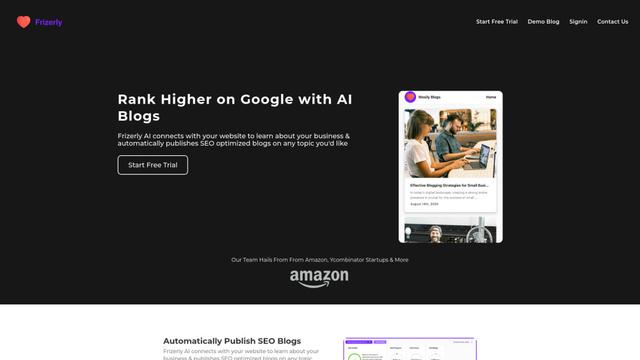
Frizerly
Frizerly is an AI-powered platform that automatically creates and publishes SEO-optimized blog content by learning about your business and industry to help improve your website's search rankings.
GPT Easy Web
GPT Easy Web is a user-friendly AI-powered platform that enables users to easily build, customize and manage websites through natural language interactions and automated tools without requiring coding knowledge.
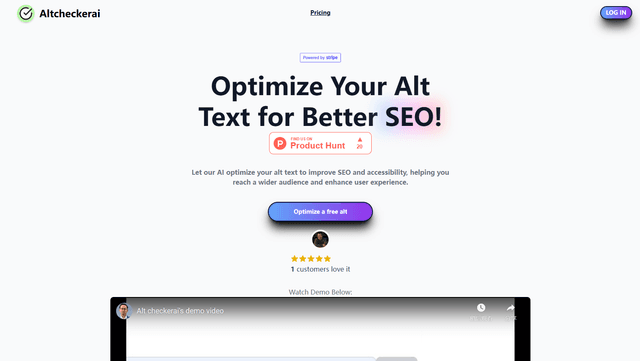
altcheckerai
AltCheckerAI is an AI-powered tool that automatically optimizes image alt text to improve website SEO and accessibility through intelligent recommendations.

Scribly AI
Scribly AI is an AI-powered content creation platform that helps users generate high-quality articles, blogs, emails, and various types of content in minutes while maintaining SEO optimization and brand voice consistency.
Popular AI Tools Like AI Visibility
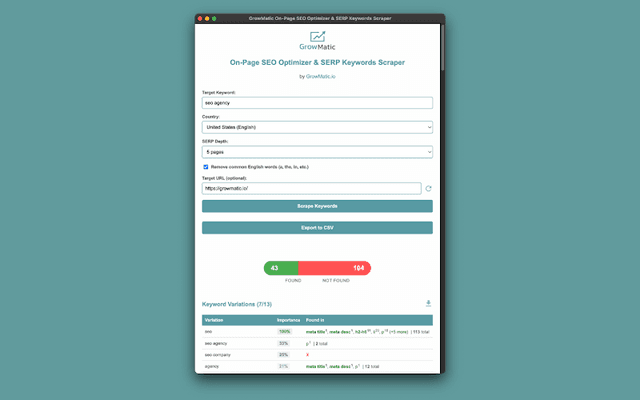
GrowMatic SEO Chrome Browser Extension
GrowMatic is a powerful Chrome browser extension that helps SEO professionals and content creators analyze Google Search Results Pages (SERPs) across 20 countries to optimize content for better search engine rankings.
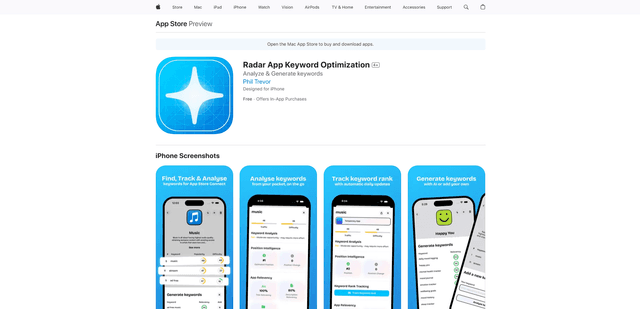
Radar
App Radar is a comprehensive app store optimization (ASO) tool that leverages AI-powered keyword research, competitor analysis, and automated tools to help improve app visibility and rankings across the Apple App Store and Google Play Store.

AISEO
AISEO is an AI-powered writing assistant that helps create SEO-optimized content quickly, with features like article generation, paraphrasing, readability improvement, and AI detection bypassing.
Surfer
Surfer is a comprehensive SEO content optimization platform that helps content creators, marketers and agencies create, optimize and rank content through data-driven analysis, AI-powered writing, and automated optimization tools.