
Waypoint-1.5
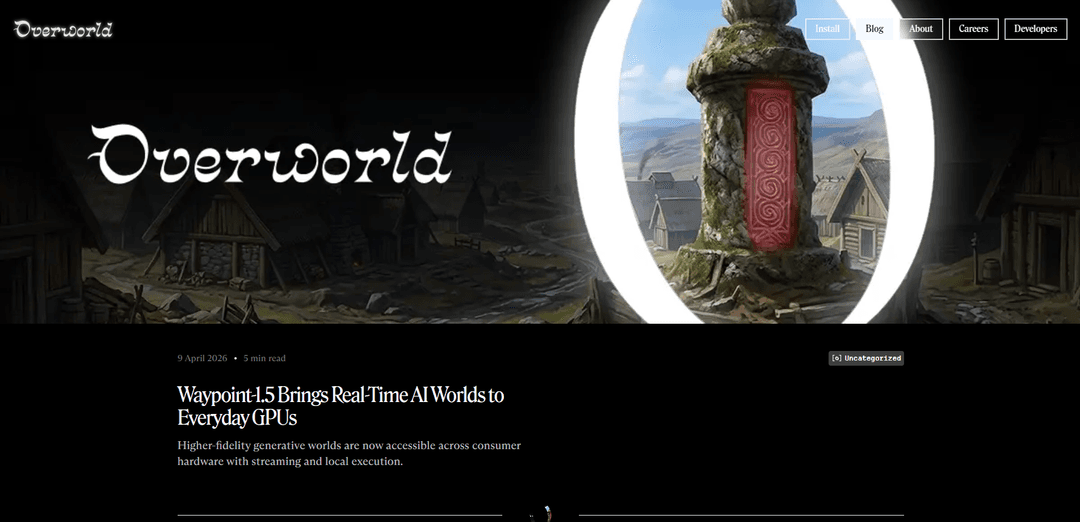
Waypoint-1.5 is a real-time AI world model that generates interactive, explorable environments at up to 720p and 60 FPS on consumer hardware, trained on 100x more data than its predecessor.
https://over.world/blog/waypoint-1-5?ref=producthunt
Product Information
Updated:Apr 15, 2026
What is Waypoint-1.5
Waypoint-1.5 is Overworld's latest release of their real-time generative world simulation system, representing a significant advancement in making AI-generated interactive environments accessible to everyday users. Built on the foundation of Waypoint-1, this update introduces dual model tiers—a 720p model for higher-end systems and a 360p model optimized for broader hardware compatibility—enabling users to explore AI-generated worlds that respond instantly to keyboard, mouse, and text inputs. The system runs locally on consumer GPUs like NVIDIA RTX cards and supports both Mac and Windows platforms. Unlike traditional video generation models that produce static content, Waypoint-1.5 creates persistent, interactive environments where users can truly inhabit and explore generated worlds in real-time, addressing what Overworld calls the 'immersion gap' between watching generated content and actually experiencing it.
Key Features of Waypoint-1.5
Waypoint-1.5 is Overworld's latest real-time AI world model that generates interactive, explorable environments at up to 720p and 60 FPS on consumer hardware. Trained on 100x more data than its predecessor, it features dual model tiers (720p and 360p) to support a wide range of gaming PCs and eventually Apple Silicon Macs. The system uses a frame-causal rectified flow transformer trained on 10,000 hours of video game footage, enabling users to create and explore generative worlds through text prompts, keyboard, and mouse controls with minimal latency. It can be accessed either locally through the Biome runtime or instantly via browser-based Overworld.stream, making real-time generative worlds accessible without requiring high-end GPU clusters.
Dual Model Tiers for Broad Hardware Support: Offers both 720p and 360p model options to enable real-time generative worlds on a wide range of consumer hardware, from high-end systems to standard gaming PCs with modern NVIDIA RTX GPUs and upcoming Apple Silicon Mac support.
Real-Time Interactive Generation: Achieves 30-60 FPS performance with low latency response to keyboard, mouse, and text inputs, allowing users to explore and interact with AI-generated environments in real-time rather than waiting for video generation.
100x Larger Training Dataset: Trained on nearly 100 times more data than Waypoint-1, including 10,000 hours of diverse video game footage with control inputs and text captions, significantly improving environment coherence and motion consistency.
Flexible Deployment Options: Accessible through both local execution via the Biome runtime with simple EXE installer, and instant browser-based access through Overworld.stream with no setup required, supporting both immediate experimentation and full local control.
World Engine Inference Library: Provides a high-performance Python inference library optimized for low latency and high throughput, enabling developers to build custom applications with sustained ~30,000 token-passes/sec on high-end GPUs.
Text and Control-Based World Generation: Allows users to generate and navigate virtual environments using text prompts combined with continuous keyboard and mouse controls, creating explorable worlds that respond dynamically to user actions.
Use Cases of Waypoint-1.5
Rapid Game Prototyping: Game developers can quickly prototype and iterate on game environments and mechanics by generating interactive worlds through text prompts, testing gameplay concepts without traditional asset creation pipelines.
Virtual World Exploration and Entertainment: Users can create and explore unique, AI-generated virtual environments for entertainment, generating diverse game-like experiences ranging from fantasy landscapes to specific themed worlds through simple text descriptions.
Interactive Simulation and Training: Organizations can leverage the real-time world generation for creating dynamic training simulations and virtual environments that adapt to user interactions, useful for education and skill development scenarios.
Content Creation and Streaming: Content creators and streamers can generate novel interactive experiences in real-time, creating unique gameplay sessions where AI-generated worlds respond to their actions and decisions for audience engagement.
Research and Development Platform: AI researchers and developers can use the open tooling and World Engine library to experiment with world models, test new interaction paradigms, and build custom applications on top of the generative world foundation.
Accessible Local AI Experiences: Individual users with consumer-grade hardware can run sophisticated AI world models locally without cloud dependencies or high-end clusters, democratizing access to generative world technology.
Pros
Runs in real-time on consumer hardware (20-60 FPS) without requiring expensive GPU clusters, making advanced AI world models accessible to a broad audience
Dual model tiers (720p and 360p) provide flexibility for different hardware capabilities while maintaining interactivity
100x larger training dataset significantly improves environment coherence and visual quality compared to the original Waypoint-1
Multiple access options including local execution and browser-based streaming allow both immediate experimentation and full control
Cons
Visual quality degrades after 5-10 seconds of generation due to autoregressive nature, limiting long-term exploration consistency
Lacks explicit game state management, leading to potential hallucinations such as forgotten terrain features or missing objects over extended sessions
Uses 'stochastic physics' learned from data rather than precise geometric calculations, making it unsuitable for applications requiring exact physical rules or long-term precision
Still requires high-end consumer GPUs (like RTX 5090) for optimal 720p performance, limiting accessibility for users with older or lower-end hardware
How to Use Waypoint-1.5
1: Choose your access method: Either download Overworld Biome for local execution or use Overworld.stream for instant browser-based access with no setup required.
2: For local execution: Download the Overworld Biome runtime from the GitHub repository (https://github.com/Overworldai/Biome). Use the simple EXE installer to set up the system on your machine in minutes.
3: Select the appropriate model tier for your hardware: Choose the 720p model if you have higher-end systems with modern NVIDIA RTX GPUs, or the 360p model for broader hardware compatibility including a variety of gaming PCs.
4: For browser access: Navigate to Overworld.stream in your web browser to run the model instantly without any local installation.
5: Set your prompt: Use text prompts to specify the type of generative world you want to create (e.g., 'A game where you herd goats in a beautiful valley').
6: Interact with the world: Use keyboard and mouse inputs to control and navigate through the generated environment in real-time. The system responds to your inputs at game-level frame rates (up to 60 FPS).
7: Explore and experiment: Move through the generative world, observing how it responds to your actions and maintains coherence as you interact with it.
8: Join the community: Connect with the Overworld Discord (https://discord.gg/overworld) to share your creations, get support, and help shape the future of generative worlds.
Waypoint-1.5 FAQs
Waypoint-1.5 is Overworld's real-time interactive AI world model that generates explorable game-like environments. It produces real-time environments at up to 720p and 60 frames per second on consumer hardware, controllable via text prompts, keyboard, and mouse inputs.
Waypoint-1.5 Video
Popular Articles

Vosko AI: Localize and Dub Videos for Global Audiences
Oct 15, 2026

Atoms: A Multi-Agent AI Platform That Transforms Ideas into Launch-Ready Products
Oct 13, 2026

Nano Banana SBTI: What It Is, How It Works, and How to Use It in 2026
Apr 15, 2026

Atoms Review — The AI Product Builder Redefining Digital Creation in 2026
Apr 10, 2026
Latest AI Tools Similar to Waypoint-1.5

Loud Fame
Loud Fame is an AI-powered video transformation tool that allows users to convert regular videos into anime-style animations and create AI-generated celebrity talking videos.

BizBoom.ai
BizBoom.ai is an AI-powered platform that automatically generates professional product videos from product links and images with 95% less cost.
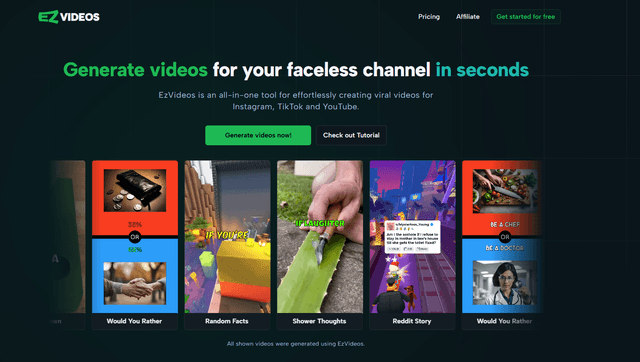
EzVideos
EzVideos is an all-in-one video creation tool that helps users generate viral videos for social media platforms like Instagram, TikTok, and YouTube with automated editing features and built-in resources.

Illuminix
Illuminix is an AI-powered platform that empowers businesses with autonomous hyper-experts and specialized tools for automated business processes, data management, and video content creation.
Popular AI Tools Like Waypoint-1.5
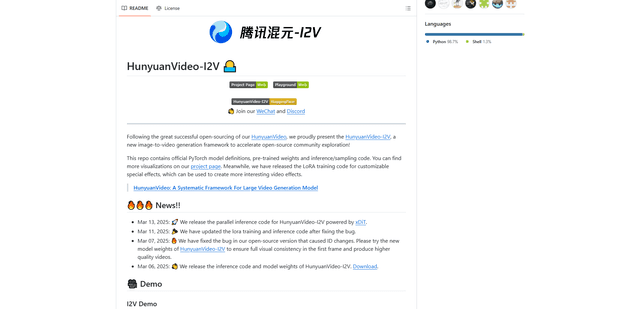
HunyuanVideo-I2V
HunyuanVideo-I2V is an open-source AI framework developed by Tencent that transforms static images into high-quality, dynamic videos with customizable motion effects and exceptional visual consistency.
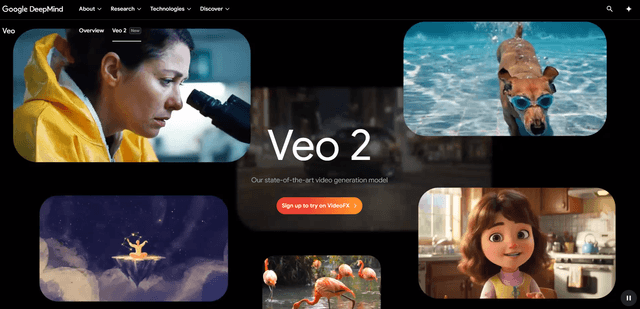
Google Veo 2
Veo 2 is Google DeepMind's state-of-the-art AI video generation model that can create high-quality videos up to 4K resolution with realistic motion, extensive camera controls, and improved physics simulation from text prompts.
Vibing
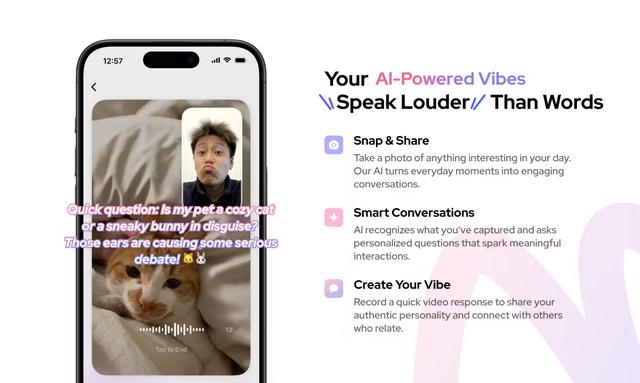
Vibing is an AI-powered dating app that helps users share authentic moments through video stories and make genuine connections based on personality matching and interactive features.

Edits, an Instagram app
Edits is Instagram's free video creation app that provides creators with professional editing tools, AI features, and analytics capabilities to create high-quality videos directly from their phones.