Scholé
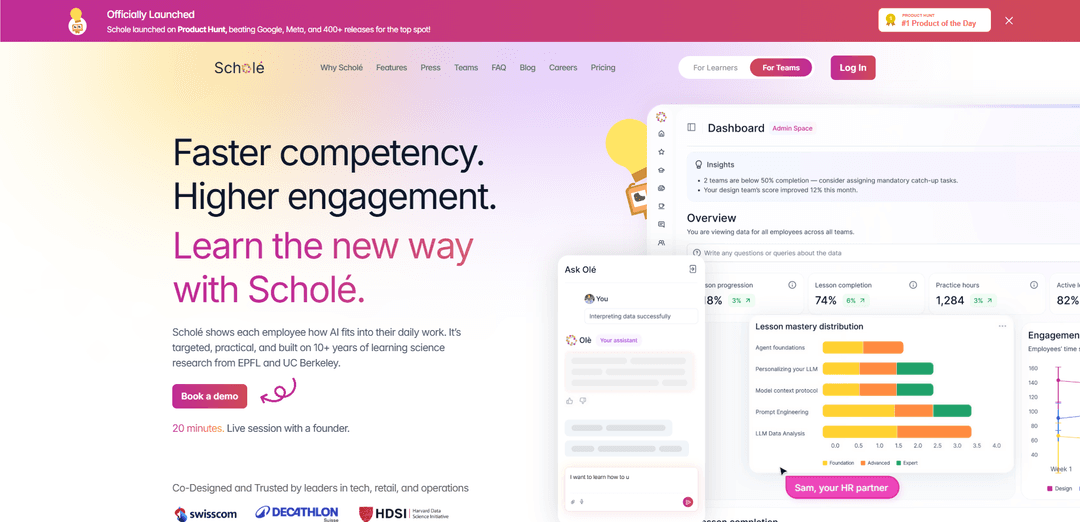
Scholé is an AI-native, adaptive learning platform that analyzes a learner’s role, tools, and day-to-day tasks to deliver short, interactive lessons grounded in real workplace materials for practical AI adoption.
https://schole.ai/?ref=producthunt
Product Information
Updated:May 19, 2026
What is Scholé
Scholé is a personalized AI learning platform built for the modern workforce, designed to help employees learn how to apply AI directly in their daily work. Instead of offering generic, static courses, Scholé tailors AI literacy and upskilling to each person’s role and workflows, emphasizing practical, job-relevant actions. The product was spun out of research from EPFL’s Machine Learning for Education Lab and UC Berkeley, and is positioned to close the enterprise AI skills gap with training that is timely, context-aware, and measurable.
Key Features of Scholé
Scholé is an AI-native, agentic learning platform that builds personalized, role-based AI fluency for professionals and enterprise teams. It analyzes a learner’s role, tools, and day-to-day tasks to generate an on-demand curriculum of short, interactive lessons that adapt in real time (difficulty, format, preferences) and emphasize immediate workplace application (“one lesson, one action”). The platform is positioned as research-grounded (EPFL & UC Berkeley origins, peer-reviewed learning research) and can stay aligned with company-specific workflows and materials to drive practical adoption rather than generic, static training.
Role- and task-based personalization: Analyzes your role, tools, and tasks to recommend exactly what to learn first (and what to ignore), reducing guesswork and making learning directly relevant.
Agentic adaptive learning engine: Continuously assesses learner needs and progress to adjust lesson difficulty, formats, and learning preferences in real time rather than following a fixed curriculum.
Short modules with immediate action: Delivers bite-sized lessons designed around “one lesson, one action,” prompting learners to try a concrete step in their actual tools the same day.
In-lesson AI tutor (Olé): An AI tutor that can answer questions mid-lesson and guide learning paths on demand, grounded in the learner’s context and (for teams) company materials.
Company-grounded training for teams: For enterprise deployments, lessons can be context-aware and grounded in internal workflows, tools, and materials to improve real-world adoption.
Research-grounded pedagogy: Built from machine-learning-for-education research (EPFL & UC Berkeley roots) and positioned as grounded in 30+ peer-reviewed papers on personalized learning.
Use Cases of Scholé
Enterprise AI adoption enablement: Train employees across functions with personalized, role-specific lessons tied to company tools and workflows to close the AI skills gap and drive measurable usage.
Marketing & communications workflow acceleration: Help marketers learn practical GenAI applications like generating campaign copy, structuring reports, and speeding up ideation—mapped to their daily tasks.
Data/analytics productivity upskilling: Teach analysts how to use AI to automate formulas, analyze data faster, and turn raw data into clear insights with step-by-step, tool-linked actions.
Design team augmentation: Guide designers to use AI for faster concept generation, iteration, and copy/creative support, with lessons aligned to real design deliverables.
Operations and knowledge-work automation: Enable operations teams to learn AI approaches for drafting structured documents, standardizing processes, and applying AI to recurring workflows.
Onboarding and continuous learning programs: Provide new hires or transitioning employees an adaptive learning path that evolves with their role and proficiency, replacing static internal trainings.
Pros
Highly practical, role-based learning that maps directly to day-to-day tasks and tools
Adaptive, agentic lesson design can reduce time wasted on irrelevant content compared to static courses
Strong credibility signals (research roots, peer-reviewed grounding, enterprise positioning)
Cons
Effectiveness may depend on quality/availability of company materials and workflow integrations for true “grounded” personalization
May be less suitable for learners seeking deep, theory-first curricula versus short action-oriented modules
Enterprise rollout could require change management to translate learning into consistent team-wide behavior
How to Use Scholé
1. Go to Scholé and start onboarding: Visit https://schole.ai/ and begin the flow that asks about your role, the tools you use, and the tasks you do day-to-day so Scholé can tailor learning to your work.
2. Define what you want to achieve (your goals): Specify what you’re trying to improve (e.g., writing structured reports with AI, generating ideas/copy faster, automating formulas and data analysis, turning raw data into clear insights). Scholé uses this to prioritize what to learn first and what to ignore.
3. Generate your personalized curriculum with Olé: Create your learning journey so Olé (the AI tutor) can produce a personalized path on demand, matching lessons to your tasks and an appropriate difficulty level.
4. Adjust lesson settings to fit your preferences: Tune the learning experience using available controls such as difficulty level, tone of voice, interactivity, and audio mode (if offered in your lesson view).
5. Review your lesson recommendations and start Lesson 1: Open the recommended sequence (often starting with foundational topics like Intro to AI / GenAI + Agents). Use the “Why this lesson?” context to understand how each lesson maps to your role and tasks.
6. Complete a short module and take the associated action immediately: Follow Scholé’s “one lesson, one action, done” approach: each module is intentionally short and ends with a concrete action you can try the same day in your actual tools/workflow.
7. Apply the lesson to your real tools and tasks: Use the lesson’s guidance to do something practical in your environment (e.g., draft a structured report, generate design/copy variations, automate spreadsheet formulas/analysis, or convert raw data into clear insights).
8. Continue to the next lesson and iterate: Return for the next module after trying the action. As you progress, Scholé adapts lesson difficulty and format in real time based on your learning needs and preferences.
9. Add or archive newly available content when prompted: If a skill/lesson shows “New Content Available,” choose whether to add the updated section to your lesson plan or archive it if it’s not relevant to your current goals.
10. Keep refining your path as your work changes: Update your role/tools/tasks or goals as needed so Scholé can re-prioritize what to learn next and keep recommendations aligned with your day-to-day work.
Scholé FAQs
Scholé is an AI learning platform that analyzes your role, tools, and tasks, then teaches you exactly how to use AI in your day-to-day work through a personalized learning journey.
Scholé Video
Popular Articles

Atoms: A Multi-Agent AI Platform That Transforms Ideas into Launch-Ready Products
May 22, 2026

Nano Banana SBTI: What It Is, How It Works, and How to Use It in 2026
Apr 15, 2026

Atoms Review — The AI Product Builder Redefining Digital Creation in 2026
Apr 10, 2026
Kilo Claw: How to Deploy and Use a True "Do‑It‑For‑You" AI Agent(2026 Update)
Apr 3, 2026
Latest AI Tools Similar to Scholé
Lingogo
Lingogo is an AI-powered English learning app designed specifically for working professionals that offers real-world workplace scenario practice through conversational AI tutoring.
Quizzr.AI
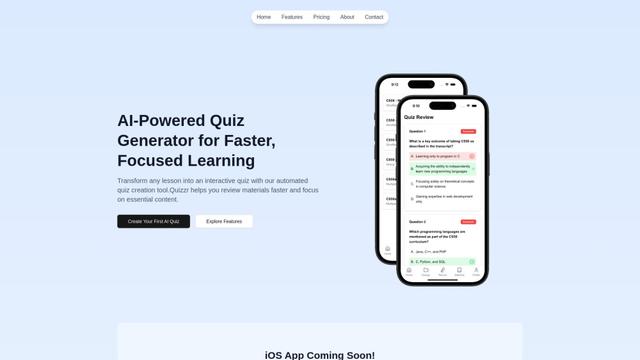
Quizzr.AI is a next-generation AI-powered quiz generation platform that transforms any learning content into interactive quizzes with verified questions, answers, and engaging features for enhanced learning efficiency.
Sai
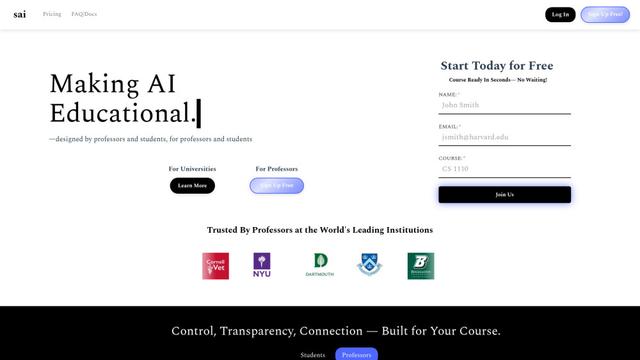
Sai is a specialized AI platform designed by and for professors and students that provides controlled, transparent, and educational AI capabilities for academic courses.
SeekhoAI
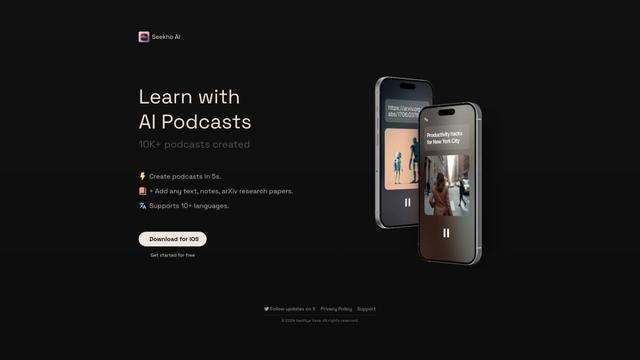
SeekhoAI is an AI-driven upskilling and learning platform that transforms text content into podcasts in multiple languages while personalizing the learning experience.
Popular AI Tools Like Scholé

NextGenAI by OpenAI
NextGenAI is a first-of-its-kind consortium launched by OpenAI that unites 15 leading research institutions with $50M in funding and tools to advance AI research and education.
ChatGPT Interactive Learning
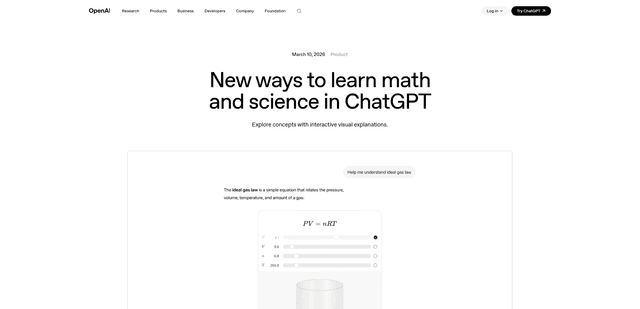
ChatGPT Interactive Learning is a new feature that provides dynamic visual explanations and interactive modules for over 70 math and science concepts, allowing users to manipulate variables and see real-time changes to better understand complex topics.
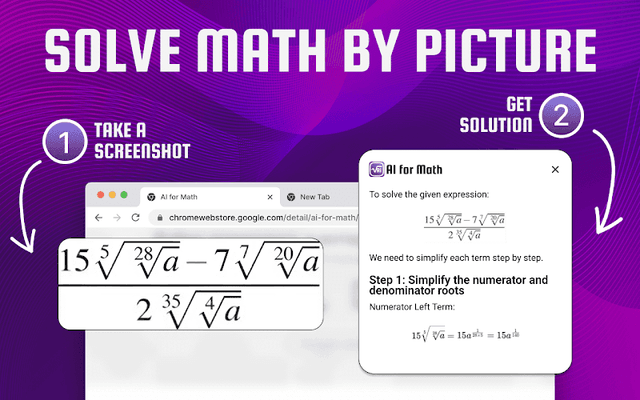
AI for Math
AI for Math is a Chrome extension that provides instant, step-by-step math solutions through AI-powered technology, allowing users to solve problems by typing equations or uploading pictures.
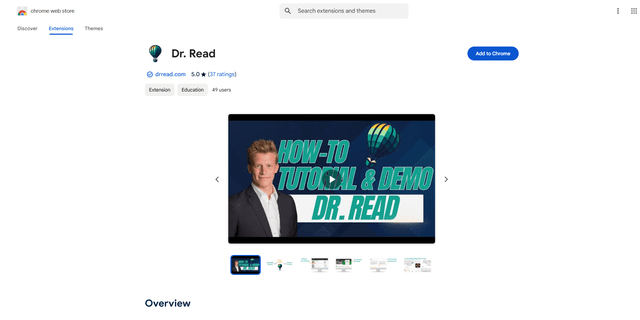
Dr. Read - Ai Reading Tutor
FreemiumAI Education Assistant
Dr. Read is an AI-powered Chrome extension that serves as a personalized reading assistant, offering features like pronunciation evaluation, context explanations, and text-to-speech to help improve reading skills.