
Privent
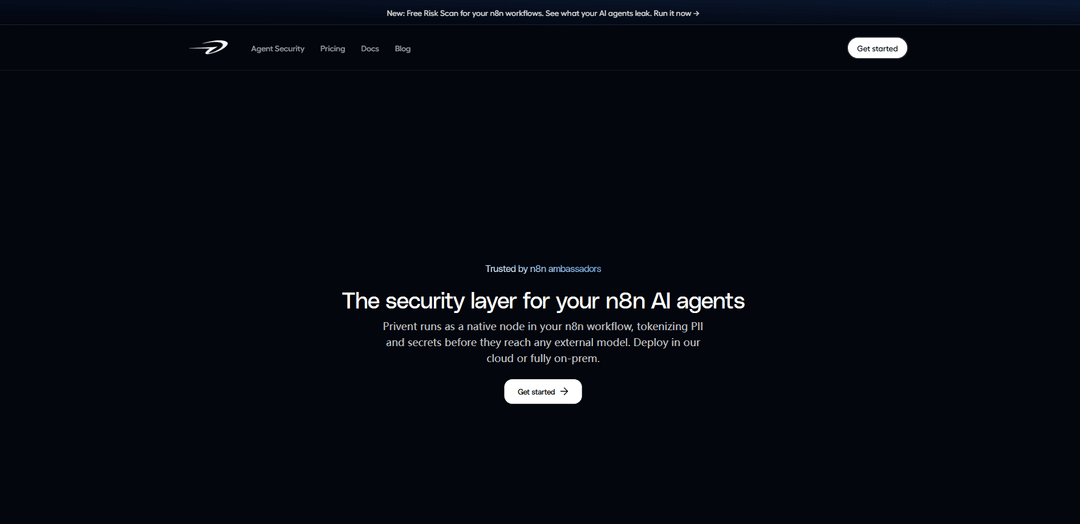
Privent is a runtime security layer for n8n AI agents that embeds as a native workflow node to detect and transform sensitive data (PII/PHI and secrets) before it reaches external LLMs, with risk scoring, audit logs, and cloud-to-fully-on-prem deployment options.
https://privent.ai/?ref=producthunt
Product Information
Updated:Aug 8, 2026
What is Privent
Privent is a security product designed to protect enterprise and regulated data when using agentic AI inside n8n. It integrates directly into n8n workflows via official native nodes, giving teams visibility and control over what AI agents send to external models such as ChatGPT, Claude, and Gemini. Privent focuses on preventing data leakage by masking/tokenizing sensitive information and providing compliance-ready monitoring, while supporting multiple deployment models including managed cloud, dedicated environments, and fully on-prem/private cloud installations (including the AI models).
Key Features of Privent
Privent is a runtime security layer for agentic AI, built to protect enterprise and healthcare data inside n8n workflows. It embeds as a native n8n node that inspects what agents have gathered, then tokenizes/masks PII/PHI and secrets before any prompt reaches external LLMs (e.g., ChatGPT, Claude, Gemini), restoring sensitive values only for destinations you explicitly trust. Privent adds risk scoring and detailed audit logging for compliance, and can be deployed as a managed cloud service, a dedicated isolated environment, or fully on-prem/private cloud where detection, rules, and even AI models run inside your network so nothing leaves your infrastructure.
Native n8n security node: Runs as an official drop-in node inside n8n workflows, securing agent steps without needing a proxy, gateway rewrite, or architectural changes.
Sensitive data masking/tokenization: Automatically transforms (masks/swaps/tokenizes) PII, PHI, and secrets so external models only receive safe versions, while workflows continue running normally.
Trust-based restoration: Restores original sensitive values only at downstream destinations you approve, keeping data protected end-to-end across agent tool calls.
Risk scoring + audit logging: Every detection is logged with risk signals, category, decision, and timestamp to support security reviews and incident investigation.
Compliance-friendly evidence trail: Provides exportable audit evidence for HIPAA reviews, with the same trail supporting GDPR and EU AI Act needs; designed to avoid storing raw PHI in logs.
Flexible deployment (cloud, dedicated, on-prem): Available as managed multi-tenant cloud, dedicated isolated environment, or fully on-prem/private cloud installation where detection, rules, and AI models run inside your network.
Use Cases of Privent
Healthcare PHI protection in agent workflows: For intake, triage, scheduling, and other EHR-connected automations, masks PHI before prompts reach external LLMs to reduce leakage risk and help stay within HIPAA boundaries.
Credential and API key leak prevention: Detects and masks passwords, database credentials, and EHR/FHIR API keys that agents may inadvertently include in prompts or intermediate steps.
HIPAA/GDPR/EU AI Act audit trails for AI usage: Creates exportable, time-stamped detection logs with decisions and risk signals to support compliance audits and internal governance without retaining raw sensitive content.
Cross-agent memory and context control: In multi-agent workflows, monitors what agents share and restricts sensitive context from passing to agents or steps that should not see it.
Enterprise AI monitoring for external model usage: Maps and governs what an organization sends to major LLM providers (e.g., ChatGPT, Claude, Gemini), helping security teams understand and reduce data exposure.
Pros
Embeds directly in n8n workflows (no proxy/rewrites), reducing integration friction.
Transforms/masks sensitive data rather than blocking, so automations can keep running.
Strong deployment options including fully on-prem/private cloud with models included, supporting strict data residency needs.
Audit logs with risk signals and exportable evidence support compliance and investigations.
Cons
Primarily focused on n8n-based agent workflows, so value is highest for teams standardized on n8n.
On-prem/full-stack installation (including models) can increase operational complexity compared with SaaS-only tools.
How to Use Privent
1) Choose your deployment model: Decide where Privent will run based on your security requirements: (a) Privent Cloud (managed multi-tenant) to start protecting n8n executions quickly, (b) Dedicated (isolated environment where your data never shares an AI model with other customers), or (c) On-prem/private cloud (detection, rules, and AI models run inside your network; nothing leaves).
2) Create a Privent account: Go to the Privent site and sign up using the “Get started” link. This is the entry point to configure Privent and obtain credentials for connecting it to n8n.
3) Install the official n8n node: Install the native Privent node for n8n (package: “n8n-nodes-privent” on npm). This is the recommended integration because it is a drop-in node (no proxy and no workflow rewrites).
4) Add Privent into your n8n workflow at the AI boundary: In n8n, place the Privent node between the steps where your workflow has assembled sensitive context (PII/PHI/secrets) and the step that calls an external model/provider. Privent is designed to sit inside the workflow so it can see everything the agent gathered before any of it leaves.
5) Connect your n8n workflow to Privent: Configure the Privent node with the connection method for your deployment. For Privent Cloud, connect your n8n workflows using an API key so you can start protecting executions in minutes. For Dedicated or On-prem, use the credentials/endpoints provided for your isolated environment.
6) Enable masking/tokenization for sensitive data: Configure Privent to transform sensitive data (PII/PHI) and secrets before they reach any external model. Privent tokenizes/masks risky data automatically so the model receives a safe version while your pipeline continues running.
7) Configure trusted destinations for restoration: Set which downstream systems are allowed to receive restored (original) values. Privent’s model is: mask before external models, then restore only inside systems you trust.
8) Run a test execution (or use the live demo) to validate interception: Execute your n8n workflow and confirm Privent intercepts the prompt/context before the external model call, applies masking/tokenization, and allows the workflow to proceed without manual review queues or friction.
9) Review risk scoring and audit logs: Check Privent’s logging for each detection event. Events are risk-scored and logged with signals such as category, decision, and timestamp, and are designed to store no raw PHI—supporting HIPAA audit trails (and also GDPR/EU AI Act evidence via the same trail).
10) Apply to common use cases (PHI, credentials, cross-agent leakage): Use Privent in workflows like intake/triage/scheduling to mask PHI before external models (HIPAA boundary), prevent credential/API key exposure from EHR/FHIR-connected agents, and control what context is allowed to pass between agents to reduce cross-agent memory leakage.
11) Scale across workflows and teams: Repeat the same pattern—Privent node inserted at AI boundaries—across all n8n agent workflows that compose prompts from internal data. This ensures consistent masking, restoration rules, and centralized auditability.
12) Get help for gaps or advanced requirements: If your scenario isn’t covered by the documented use cases or you need deployment assistance (especially for on-prem with models included), contact Privent via their site; they state they respond within one business day.
Privent FAQs
Privent is a runtime security layer for agentic AI workflows in n8n. It runs as a native n8n node to detect and transform sensitive data (like PII/PHI and secrets) before it reaches external AI models, while logging actions for audit.
Privent Video
Popular Articles

Vosko AI: Localize and Dub Videos for Global Audiences
Oct 15, 2026

Atoms: A Multi-Agent AI Platform That Transforms Ideas into Launch-Ready Products
Oct 13, 2026

Nano Banana SBTI: What It Is, How It Works, and How to Use It in 2026
Apr 15, 2026

Atoms Review — The AI Product Builder Redefining Digital Creation in 2026
Apr 10, 2026
Latest AI Tools Similar to Privent
invoices.dev
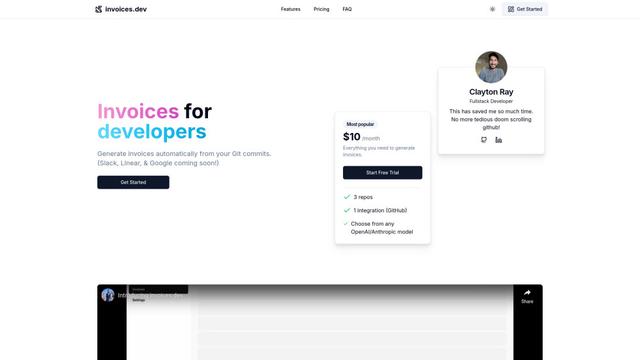
invoices.dev is an automated invoicing platform that generates invoices directly from developers' Git commits, with integration capabilities for GitHub, Slack, Linear, and Google services.
Monyble
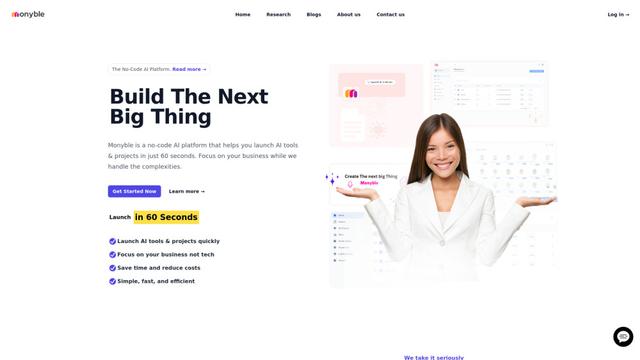
Monyble is a no-code AI platform that enables users to launch AI tools and projects within 60 seconds without requiring technical expertise.
Devozy.ai
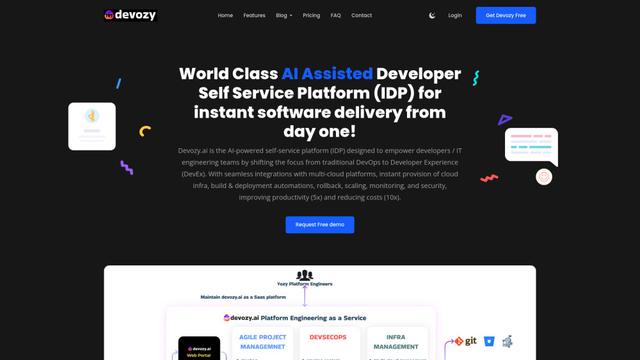
Devozy.ai is an AI-powered developer self-service platform that combines Agile project management, DevSecOps, multi-cloud infrastructure management, and IT service management into a unified solution for accelerating software delivery.
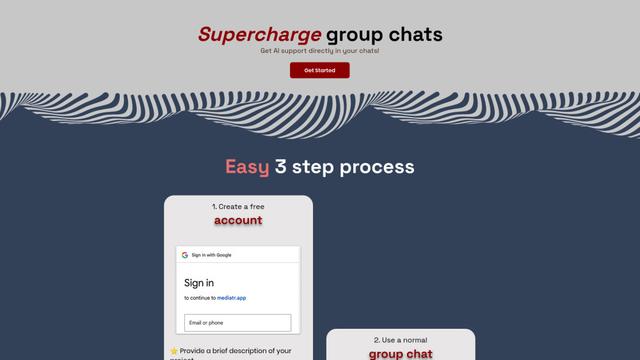
Mediatr
MediatR is a popular open-source .NET library that implements the Mediator pattern to provide simple and flexible request/response handling, command processing, and event notifications while promoting loose coupling between application components.
Popular AI Tools Like Privent
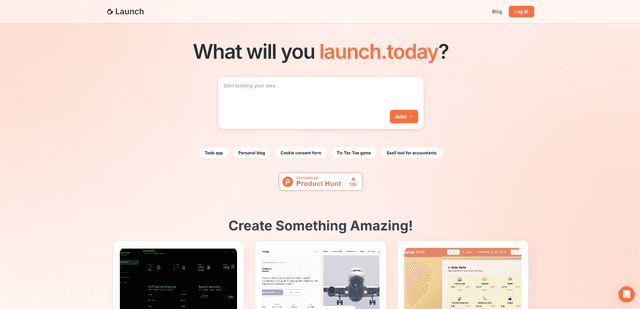
Launch
Launch is an AI-powered platform that enables users to build full-stack applications instantly while providing comprehensive tools for product launches, entrepreneurship programs, and customer acquisition.

GitHub Copilot Chat
GitHub Copilot Chat is an AI-powered coding assistant that provides natural language interactions, real-time code suggestions, and contextual support directly within supported IDEs and GitHub.com.
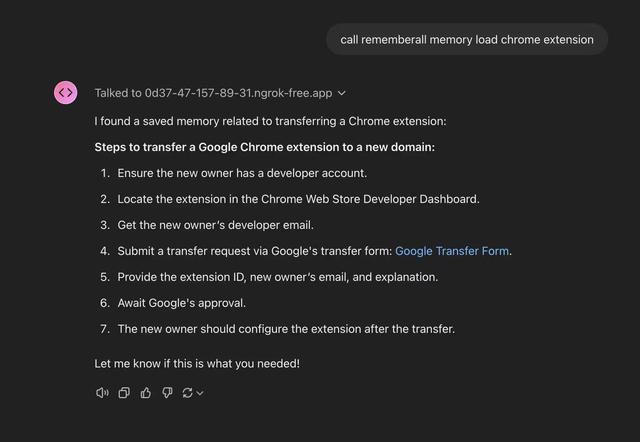
Rememberall
Rememberall is a secure, open-source long-term memory solution that enables AI applications and GPT models to maintain persistent memory across conversations through semantic search and vector storage capabilities.
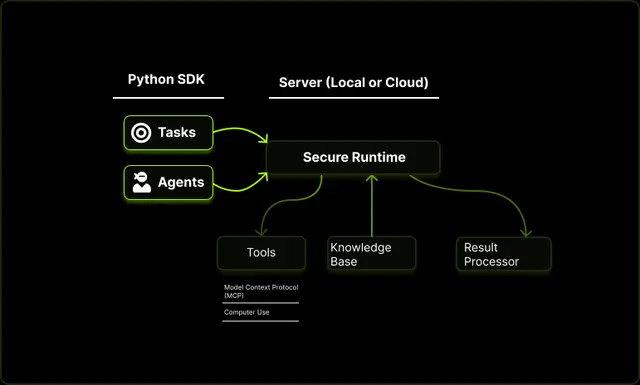
Upsonic
Upsonic is a reliability-focused AI agent framework with dockerized server-client architecture that enables trusted agent workflows through advanced features like verification layers, triangular architecture, and Model Context Protocol (MCP) integration.