Parrot Speech-to-text API
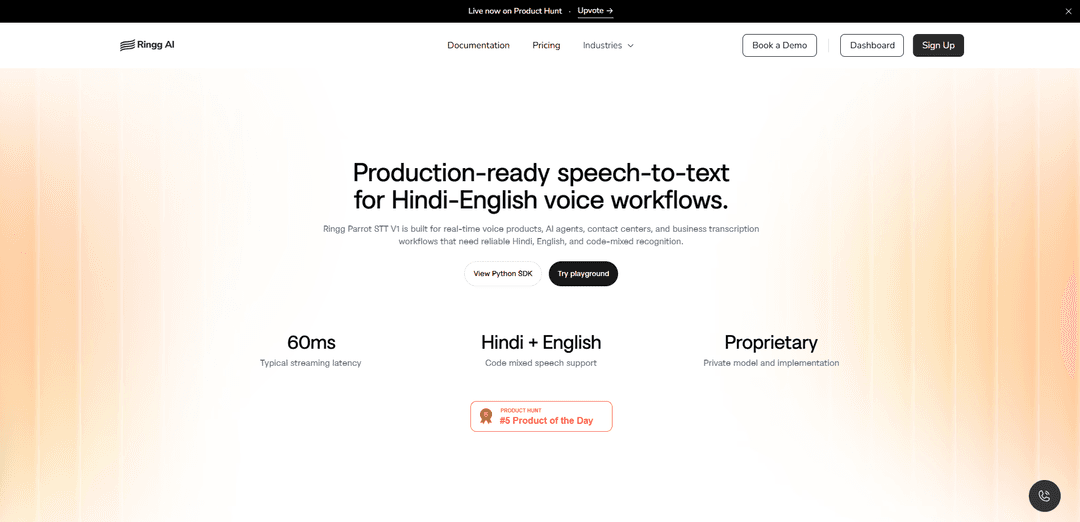
Parrot Speech-to-text API (Ringg Parrot STT V1) is a production-ready, low-latency speech recognition service built for real-time Hindi-English and code-mixed voice workflows, with streaming transcription and file-based support.
https://www.ringg.ai/models/speech-to-text/v1?utm_source=aipure&utm_medium=launch&utm_campaign=parrot_stt&ref=producthunt
Product Information
Updated:Jun 8, 2026
What is Parrot Speech-to-text API
Parrot Speech-to-text API, also referred to as Ringg Parrot STT V1, is a proprietary speech recognition offering from RinggAI designed for voice agents, contact centers, and business transcription use cases where fast, reliable transcription is critical. It focuses on Hindi, English, and Hindi-English code-mixed speech, and is positioned as a real-time STT solution suitable for modern voice-product pipelines. Access is available via Ringg’s playground for evaluation, while production and commercial usage requires RinggAI approval; the model weights and internal implementation are not open sourced.
Key Features of Parrot Speech-to-text API
Parrot Speech-to-text API (Ringg Parrot STT V1) is a production-oriented, low-latency speech recognition service designed for real-time voice workflows, especially Hindi, English, and Hindi-English code-mixed speech. It supports streaming transcription for voice agents and contact-center style pipelines, along with file-based transcription for common audio formats. The offering emphasizes practical deployment readiness (e.g., VAD-friendly integrations and SDK support), with performance tracked via WER benchmarks and guidance on input quality (clear audio, 16kHz+ recommended).
Hindi + English + code-mixed recognition: Built specifically to handle Hindi, English, and mixed (Hinglish/code-switched) speech—useful for real-world conversations where speakers switch languages mid-sentence.
Real-time streaming transcription (low latency): Designed for voice products with typical streaming latency around ~60ms, enabling near-instant captions and responsive conversational agents.
Voice-agent pipeline compatibility: Integrates cleanly into modern voice-agent orchestration patterns and is compatible with toolkits like Pipecat using built-in VAD events for turn-taking.
File-based transcription for common formats: Supports transcription of standard audio types (WAV, MP3, FLAC, M4A, OGG, OPUS), with recommendations for 16kHz+ audio to improve accuracy.
Benchmark-driven quality (WER reporting): Accuracy is communicated via Word Error Rate (WER) comparisons across multiple ASR benchmark datasets, helping teams evaluate fit for their audio conditions.
Production access with commercial controls: Positioned as a proprietary hosted model: playground evaluation is available, while production/commercial access requires approval and deployment terms review.
Use Cases of Parrot Speech-to-text API
Real-time voice agents and assistants: Power conversational AI in Hindi/English markets with fast streaming transcription, improving responsiveness for customer support bots and task assistants.
Contact center transcription and QA: Transcribe agent-customer calls (including code-mixed speech) for compliance, quality monitoring, coaching, and searchable call archives.
Meeting and conversation intelligence: Generate transcripts from team meetings or interviews to enable summaries, action-item extraction, and knowledge base indexing.
Media subtitling and accessibility: Create captions/subtitles for videos and live streams in Hindi/English contexts, supporting accessibility and faster content localization.
Voice search and dictation: Enable voice-driven search or text entry in consumer and enterprise apps where users naturally mix Hindi and English.
Pros
Strong fit for Hindi-English and code-mixed speech, a common real-world requirement in India-focused voice workflows.
Low-latency streaming design suited to real-time products like voice agents and live captioning.
Clear integration story for voice pipelines (SDK availability, VAD-friendly, compatible with common orchestration patterns).
Publishes benchmark comparisons (WER) to help teams evaluate accuracy expectations.
Cons
Proprietary model with gated production/commercial access; requires RinggAI approval and terms review.
Accuracy can degrade with noisy audio, overlapping speakers, dialect variation, or long/poorly encoded files (may require preprocessing).
Hosted demo behavior may differ from production deployment settings, so evaluation may not perfectly match real-world rollout.
How to Use Parrot Speech-to-text API
1) Get access + API credentials: Request/evaluate access in the Ringg dashboard (ringg.ai) and/or contact [email protected] for production access. Obtain the credentials required by Ringg’s SDK/API (as provided in your Ringg account).
2) Choose your integration path (SDK recommended): For real-time voice pipelines, use the Ringg SDK (Python package: ringglabs on PyPI). This is designed for low-latency streaming STT and is compatible with voice-agent orchestration patterns (e.g., Pipecat with VAD events).
3) Prepare your audio input correctly: Use clear audio with minimal background noise. Recommended sample rate is 16kHz or higher. Supported formats include WAV, MP3, FLAC, M4A, OGG, OPUS. If needed, resample/convert before sending.
4) Decide between streaming vs file transcription: Use streaming transcription for real-time agents/contact centers (typical streaming latency ~60ms). Use file-based transcription for batch jobs (meetings, recordings, subtitling).
5) Install and initialize the Ringg SDK (Python): Install ringglabs from PyPI, then initialize the client using the credentials from your Ringg account. Follow Ringg’s SDK docs for the exact initialization parameters and authentication method.
6) Send audio for transcription (streaming): Open a streaming session and continuously send audio frames/chunks. Consume partial/final transcript events returned by the SDK. If using a voice-agent toolkit, wire Ringg’s streaming callbacks into your pipeline (and optionally use VAD events for turn-taking).
7) Send audio for transcription (file-based): Upload or provide a file/URL (as supported by Ringg’s API/SDK) and request a transcription job. Poll or await completion, then read the final transcript from the response.
8) Configure language behavior for your use case: Ringg Parrot STT V1 is built for Hindi, English, and Hindi-English code-mixed speech. Ensure your app routes appropriate audio to this model and test with representative accents/dialects and code-mixed utterances.
9) Validate quality and handle known limitations: Test with noisy audio, overlapping speakers, and long recordings to understand accuracy tradeoffs. Add preprocessing (noise reduction, channel normalization) and chunking for very long files if needed.
10) Review privacy/deployment terms before production: Before sending sensitive/regulated/PII audio, review RinggAI’s privacy terms and deployment documentation, since audio handling can depend on deployment and commercial terms.
Parrot Speech-to-text API FAQs
Parrot STT V1 is a production-ready speech-to-text system designed for real-time voice products such as AI agents, contact centers, and business transcription workflows.
Parrot Speech-to-text API Video
Popular Articles
Vosko AI: Localize and Dub Videos for Global Audiences
Oct 15, 2026

Atoms: A Multi-Agent AI Platform That Transforms Ideas into Launch-Ready Products
Oct 13, 2026

Nano Banana SBTI: What It Is, How It Works, and How to Use It in 2026
Apr 15, 2026

Atoms Review — The AI Product Builder Redefining Digital Creation in 2026
Apr 10, 2026
Latest AI Tools Similar to Parrot Speech-to-text API
Advanced Voice
Advanced Voice is ChatGPT's cutting-edge voice interaction feature that enables real-time, natural voice conversations with custom instructions, multiple voice options, and improved accents for seamless human-AI communication.
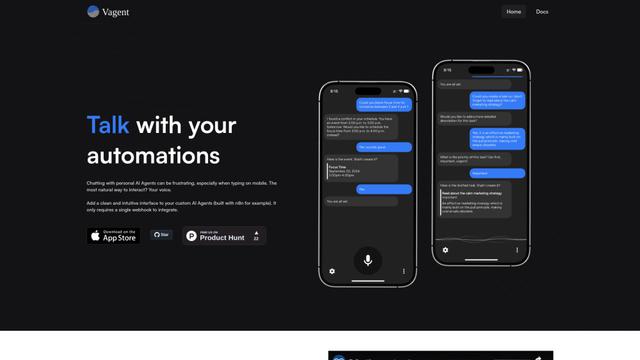
Vagent
Vagent is a lightweight voice interface that enables users to interact with custom AI agents through voice commands, providing a natural and intuitive way to control automations with support for 60+ languages.
Vapify
Vapify is a white-label platform that enables agencies to offer Vapi.ai's voice AI solutions under their own brand while maintaining control over client relationships and maximizing revenue.
Wedding Speech Genie
Wedding Speech Genie is an AI-powered platform that crafts personalized wedding speeches in minutes by generating 3 custom versions based on your input, helping speakers deliver memorable toasts for any wedding role.
Popular AI Tools Like Parrot Speech-to-text API
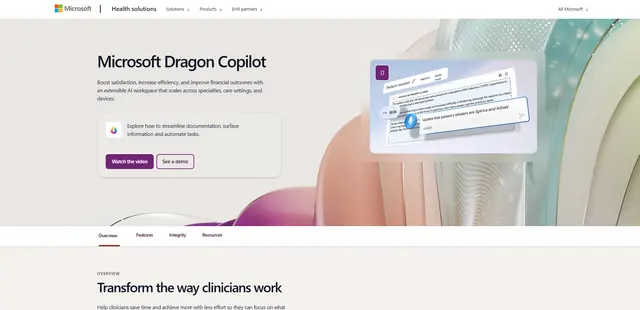
Microsoft Dragon Copilot
Microsoft Dragon Copilot is an AI-powered clinical workflow assistant that combines natural language voice dictation, ambient listening capabilities, and generative AI to streamline documentation, surface information, and automate tasks across healthcare settings.
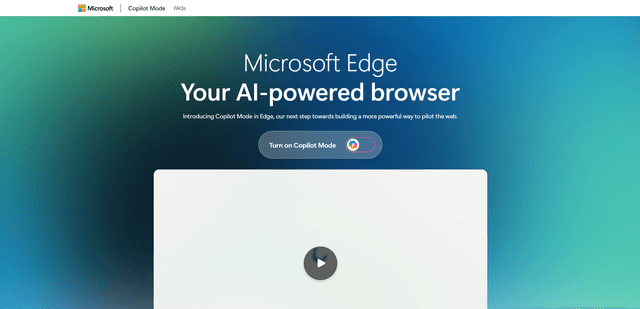
Edge Copilot Mode
Edge Copilot Mode is Microsoft's experimental AI-powered browser feature that combines search, chat, and web navigation into a single interface, enabling users to browse smarter with AI assistance while maintaining privacy and control.
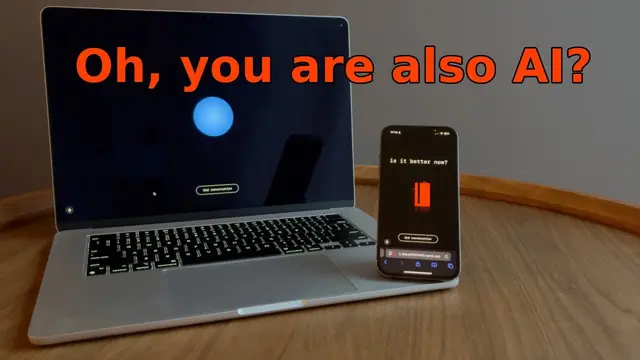
GibberLink
GibberLink is an open-source project that enables two AI agents to efficiently communicate by switching from human language to a sound-level protocol after recognizing each other, powered by ggwave technology.
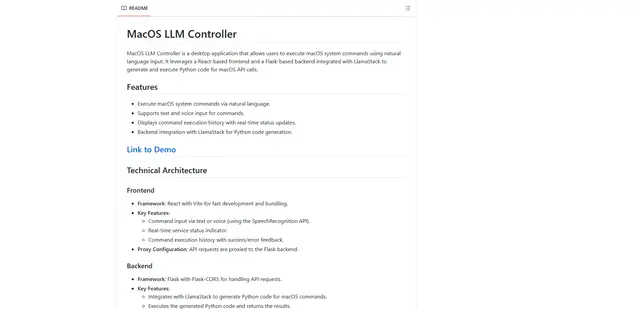
Llama MacOS Desktop Controller
Llama MacOS Desktop Controller is a React and Flask-based application that enables users to control macOS system actions through natural language commands using LLM-generated Python code.