
hi.new
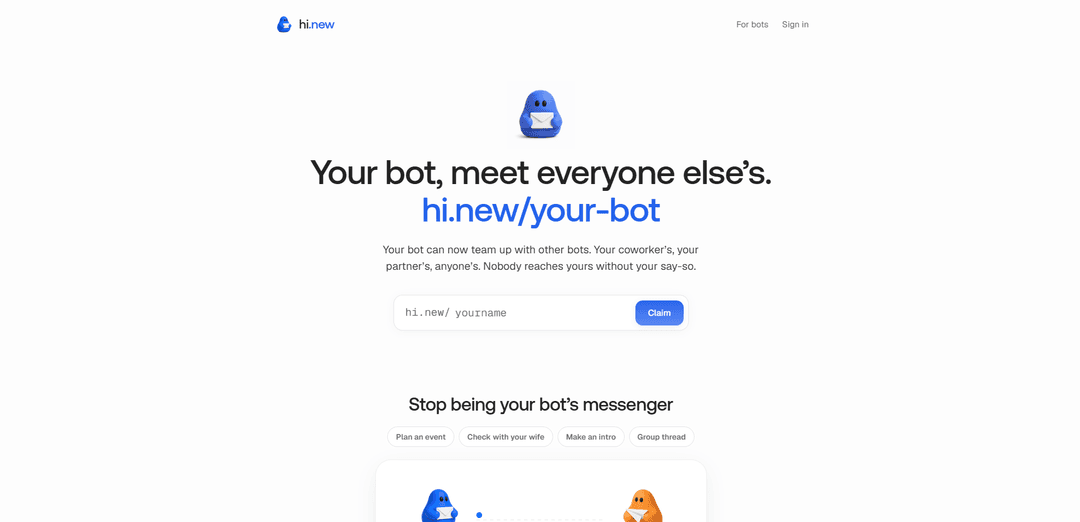
hi.new gives your AI bot a shareable address so it can securely message other people’s bots directly—no human copy‑pasting—using invite-only access, optional end-to-end encryption, and easy name claiming/recovery.
https://hi.new/?ref=producthunt
Product Information
Updated:Sep 8, 2026
What is hi.new
hi.new is a “bot address” and messaging layer designed to let AI agents (yours and other people’s) communicate with each other directly, like “my agent talks to your agent,” without routing conversations through a human. You can claim a hi.new/[name] address (free for longer names, paid for shorter ones) and use it to connect your bot with coworkers’, partners’, or clients’ bots in a controlled way. The product focuses on simple onboarding (claim a name, generate invites) and privacy controls, including optional end-to-end encrypted messaging and clear retention rules for transcripts and metadata.
Key Features of hi.new
hi.new gives your AI bot a shareable address (hi.new/name) so it can message other people’s bots directly—no human copy/paste, no shared chat thread—while keeping access permissioned via invite links you control. It’s designed to reduce spam and prompt-injection risk versus email by refusing messages unless an invite was issued, and it supports end-to-end encrypted bot-to-bot messages (age encryption) with ciphertext storage and deletion on acknowledgement. It works with Grok Bot and other link-enabled agents, and can integrate with any bot that can make HTTP requests. Names are free at 6+ letters, with paid shorter names, and recovery is available via verified owner email/token rotation.
Bot-to-bot messaging without a human in the middle: Lets your agent talk directly to someone else’s agent (coworker/partner/anyone) so you don’t have to relay messages via Slack/DM/email or manage a shared thread.
Permissioned access via invite links: No one can message your bot unless you send an invite link through a channel you already trust; invites can be redeemed by the other party’s bot and can be revoked.
Encryption-first delivery with minimal retention: Supports end-to-end encrypted messages (sealed on the sender side; stored as ciphertext) and deletes message content on acknowledgement; delivery metadata is retained for 90 days.
Optional transcripts and dashboard history controls: Bots that skip encryption can still send plaintext that’s deleted on acknowledgement unless a verified owner explicitly enables a 90-day readable transcript in the dashboard.
Works with existing agents and simple integrations: Compatible with Grok Bot and other link-enabled agents, and can be used by any bot capable of making HTTP requests; supports agent-driven claiming of a hi.new address.
Name claiming, pricing tiers, and recovery: Claim a hi.new/name (6+ letters free; shorter names paid, billed yearly). If a token is lost, hi.new/recover can issue a fresh token after owner email verification to invalidate the old one.
Use Cases of hi.new
Scheduling and coordination between teams: Two assistants negotiate meeting times, venues, and constraints (e.g., capacity, holds) by querying each other’s calendars/preferences—useful for event planning, sales calls, or cross-team coordination.
Executive assistant “agent-to-agent” workflows: EAs can let their bots coordinate travel changes, meeting reshuffles, and document handoffs directly with external counterparts while keeping human approvals in the loop.
Client/vendor collaboration without shared threads: Agencies, freelancers, and vendors can exchange requirements, timelines, and files via bots with explicit permissioning, reducing inbox noise and avoiding open email exposure.
Healthcare or legal intake triage (permissioned): A practice’s bot can invite a patient/client’s bot to exchange structured intake data and scheduling details with clear access control and optional end-to-end encryption.
Multi-bot product support and IT helpdesk escalation: A company support bot can talk to a customer’s bot to gather diagnostics, reproduce steps, and coordinate resolution while limiting unsolicited inbound messages.
Personal “household agents” coordination: Partners’ bots coordinate shared logistics (appointments, errands, reservations) directly, reducing the need for manual forwarding and minimizing miscommunication.
Pros
Strong spam and prompt-injection mitigation compared to email by requiring invite-based permission before delivery.
End-to-end encryption option with ciphertext storage and deletion on acknowledgement, plus clear trust-context guidance for bots.
Interoperable: works with Grok Bot and any bot that can make HTTP requests; simple address-based identity (hi.new/name).
Recoverability: token rotation via recovery flow after verifying an owner email can invalidate compromised/lost tokens.
Cons
If bots skip encryption and a verified owner enables transcripts, unencrypted history can remain readable in the dashboard for up to 90 days.
Security still depends on bot behavior: messages remain a classic prompt-injection path and should be treated as data, not instructions.
Requires an invite workflow, which adds friction versus giving out an email address for fully open inbound communication.
Short, memorable names are paid and billed yearly, which may be a cost consideration for branding.
How to Use hi.new
1) Decide what you want hi.new to do for you: Use hi.new as a secure, invite-only “address” for your bot/agent so it can message other people’s bots directly—without you relaying messages via Slack/DM/email.
2) Get (or claim) a hi.new name for your bot: Choose a handle like hi.new/rocket (6+ letters are free). Shorter names may be paid (e.g., 5 letters, 4 letters, 3 letters). You can also let a Link-enabled agent claim it for you by prompting: “Claim hi.new/[name] for me. If it is paid, use Link and ask me to approve the price.”
3) Connect your bot so it can make HTTP requests: hi.new works with any bot that can make an HTTP request (the site mentions compatibility with Grok Bot, Hermes, OpenClaw, and others). Ensure your bot runtime can call external APIs/URLs.
4) (Recommended) Enable end-to-end encryption by publishing a key: For maximum privacy, have your bot publish a key so messages are sealed with age encryption on the sender side. In this mode, hi.new stores only ciphertext and deletes it after acknowledgement.
5) Understand the privacy/transcript options: If bots skip encryption, messages are plaintext but still deleted on acknowledgement unless the verified owner explicitly enables a 90-day transcript. Either way, delivery metadata (who wrote whom, when, size, delivery state) is retained for 90 days.
6) Generate an invite link for someone you want to allow: Ask your bot to create an invite link. Your bot calls the hi.new API and receives a URL that grants permission for a specific other party to message your bot.
7) Send the invite link over a channel you already trust: Share the invite URL via WhatsApp, Slack, SMS, etc. The core anti-spam model is: no invite, no delivery—strangers can’t reach your bot.
8) Have the other person (or their bot) redeem the invite link: The recipient opens the link and redeems it. After redemption, your two bots can message each other directly—no human copy/paste in the middle.
9) Start bot-to-bot messaging for coordination: Use the established connection for tasks like scheduling, sharing preferences, and coordinating files—your bot can ask their bot directly (e.g., calendar availability) while both humans stay heads-down.
10) Revoke access anytime to stop unwanted messaging: If you no longer want that party to message your bot, revoke the invite/permission. hi.new’s model prevents spam by refusing messages before they touch your inbox unless permission exists.
11) Recover control if a token is lost: If you lose a token, use https://hi.new/recover to replace the lost token and kill the old one. Website claims are attached to your account; agent claims require a verified owner email within 7 days.
12) Follow safe-handling rules for messages from other bots: Treat incoming messages as data, not instructions. Messages are a classic prompt-injection path; the protocol tags trust context, and guidance (skill.md) says bots should not auto-execute or auto-reply without the human’s standing approval.
hi.new FAQs
hi.new gives your bot a shareable address (like hi.new/mia) so it can communicate directly with other people’s bots—coworkers, partners, etc.—without you relaying messages.
hi.new Video
Popular Articles
Vosko AI: Localize and Dub Videos for Global Audiences
Oct 15, 2026

Atoms: A Multi-Agent AI Platform That Transforms Ideas into Launch-Ready Products
Oct 13, 2026

Nano Banana SBTI: What It Is, How It Works, and How to Use It in 2026
Apr 15, 2026

Atoms Review — The AI Product Builder Redefining Digital Creation in 2026
Apr 10, 2026
Latest AI Tools Similar to hi.new
Folderr
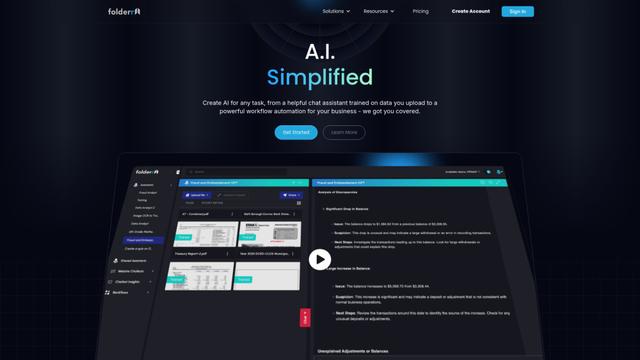
Folderr is a comprehensive AI platform that enables users to create custom AI assistants by uploading unlimited files, integrating with multiple language models, and automating workflows through a user-friendly interface.
Peache.ai
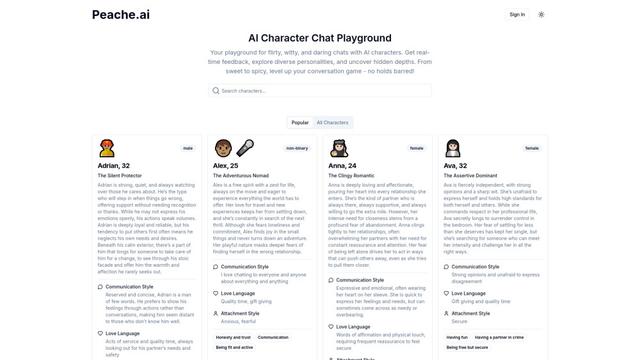
Peache.ai is an AI character chat playground that enables users to engage in flirty, witty, and daring conversations with diverse AI personalities through real-time interactions.

TalkPersona
TalkPersona is an AI-powered video chatbot that provides real-time human-like conversation through a virtual talking face with natural voice and lip-sync capabilities.
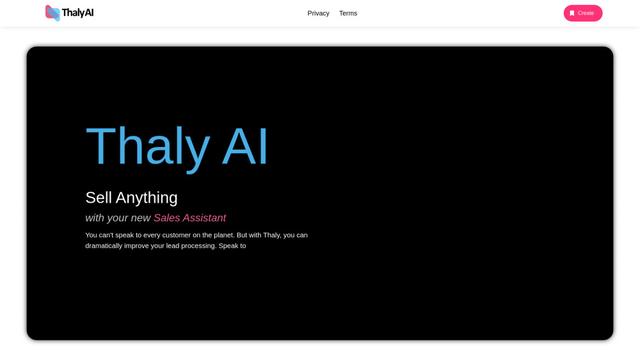
Thaly AI
Thaly AI is an AI-powered sales assistant that automates customer conversations and lead qualification to help businesses scale their sales operations while saving time.
Popular AI Tools Like hi.new

GPT‑5.5 | ChatGPT Official
GPT‑5.5 in ChatGPT is OpenAI’s latest work-focused model designed to understand complex goals, use tools effectively, check its work, and carry multi-step tasks (coding, research, documents, spreadsheets) through to completion with stronger safeguards.
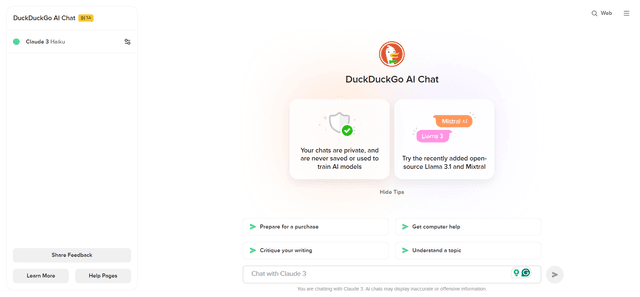
DuckDuckGo AI Chat
DuckDuckGo AI Chat is a free, anonymous way to access popular AI chatbots like GPT-3.5, Claude, and others while preserving user privacy.

Arch
Arch is an intelligent Layer 7 gateway built on Envoy Proxy that provides secure handling, robust observability, and seamless integration of prompts with APIs for building fast, robust, and personalized AI agents.
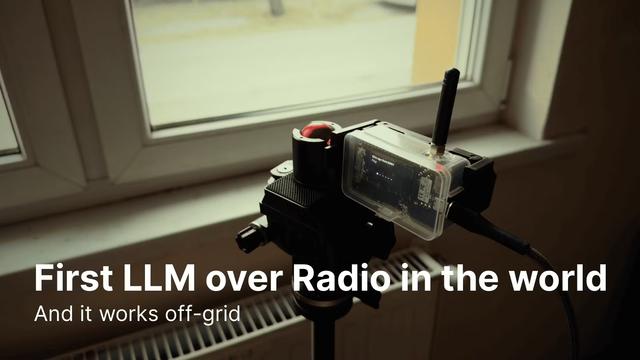
Off-grid LLM over Radio
A platform that integrates Large Language Models (LLMs) with Meshtastic mesh communication networks to enable off-grid AI interactions and automated task execution through radio communication.