
Croct
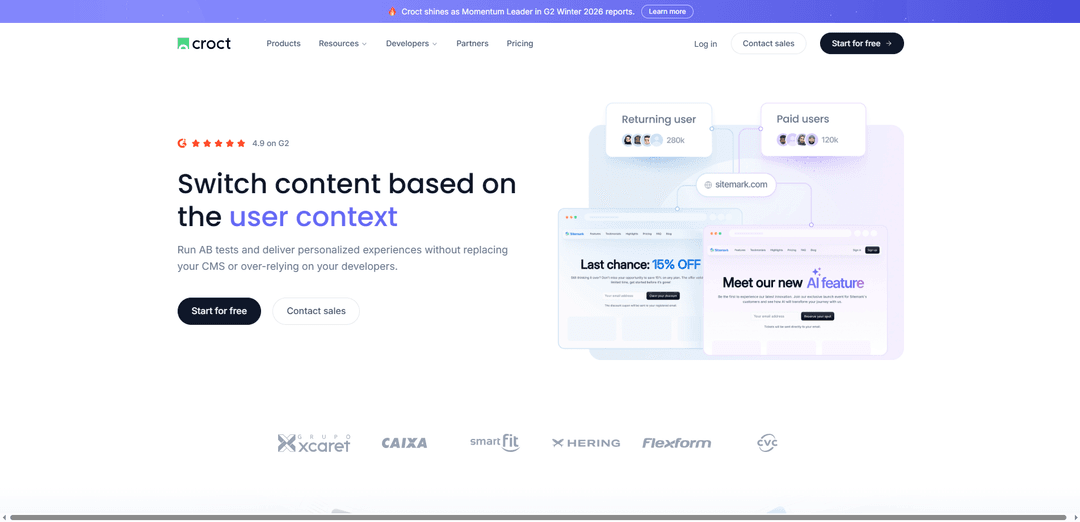
Croct is a headless component-based CMS platform that combines content management, personalization, AB testing, and analytics capabilities to help teams optimize digital experiences without complex integrations.
https://croct.com/?ref=producthunt
Product Information
Updated:Jan 8, 2026
What is Croct
Croct is a Personalization Management System that goes beyond traditional headless CMS capabilities. It's designed for developers, marketers, and digital product teams who need granular control over content management while enabling rapid experimentation and seamless integration with modern technology stacks. The platform serves as an end-to-end solution that combines a component-based CMS with built-in optimization tools, allowing teams to manage content, run experiments, and analyze results all in one place.
Key Features of Croct
Croct is a comprehensive personalization platform that combines a headless CMS with built-in A/B testing, content management, and analytics capabilities. It enables product and growth teams to manage content, run experiments, and personalize user experiences in real-time without heavy developer dependency. The platform features AI-powered audience segmentation, component-based architecture, and seamless integration with modern frameworks like Next.js and React.
Component-based Headless CMS: Offers a modular approach with typed attributes, hybrid components, and auto-versioning that ensures consistent design system implementation across products
Built-in A/B Testing & Analytics: Provides Bayesian A/B testing capabilities with real-time analytics dashboards for measuring performance and user behavior without requiring additional tools
AI-Powered Personalization: Enables real-time content personalization based on user behavior, interests, and browsing history with automated audience segmentation
No-Code Content Editor: Features an intuitive interface that allows non-technical teams to manage and update content without developer assistance
Use Cases of Croct
E-commerce Optimization: Personalizing product recommendations and promotional content based on user behavior and geographic location to increase conversion rates
Marketing Website Enhancement: Creating targeted messaging and content variations for different audience segments to improve engagement and lead generation
Product Experience Optimization: Running experiments and personalizing user interfaces to enhance user experience and drive feature adoption
Pros
Quick implementation with minimal developer dependency
Comprehensive all-in-one solution combining CMS, testing, and personalization
High performance with sub-90ms response times at P95
Cons
Initial setup requires some developer time
Limited mobile app features
May require learning curve for complex personalizations
How to Use Croct
Install and integrate SDK: Choose and install the appropriate SDK for your tech stack (Next.js, React etc). The SDKs are designed for easy integration with minimal code changes required.
Select target audience: Use Croct's Contextual Query Language (CQL) to define your target audience using simple business rules like 'user is returning' or location-based criteria.
Create content slots: Define the parts of your website you want to personalize by creating slots - these can be components like navbars, cards, CTAs, pricing sections etc.
Define content variations: Using the content editor interface, create different content variants for your target audiences. No developer support needed for content updates.
Set up A/B testing: Configure A/B tests to compare different content variations and validate which performs better with your audience segments.
Monitor analytics: Track performance using the built-in analytics dashboard to measure impact on key metrics like conversion rates and user engagement.
Optimize and iterate: Based on analytics insights, continuously refine your personalization strategy by adjusting audience segments and content variations.
Croct FAQs
Croct is a headless CMS and personalization platform that combines content management with optimization tools. It allows users to create personalized website experiences, run AB tests, and manage content without developer dependency.
Croct Video
Popular Articles

Vosko AI: Localize and Dub Videos for Global Audiences
Oct 15, 2026

Atoms: A Multi-Agent AI Platform That Transforms Ideas into Launch-Ready Products
Oct 13, 2026

Nano Banana SBTI: What It Is, How It Works, and How to Use It in 2026
Apr 15, 2026

Atoms Review — The AI Product Builder Redefining Digital Creation in 2026
Apr 10, 2026
Latest AI Tools Similar to Croct
GPT Easy Web
GPT Easy Web is a user-friendly AI-powered platform that enables users to easily build, customize and manage websites through natural language interactions and automated tools without requiring coding knowledge.
AI Website Tool
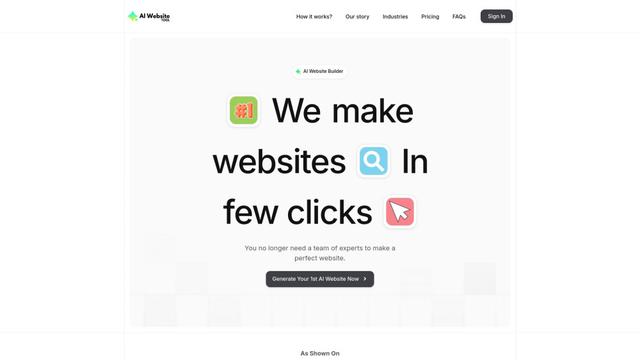
AI Website Tool is an AI-powered website builder that creates professional websites in minutes by automatically generating business-focused copy, custom visuals, and responsive designs with just a few clicks.
Softgen
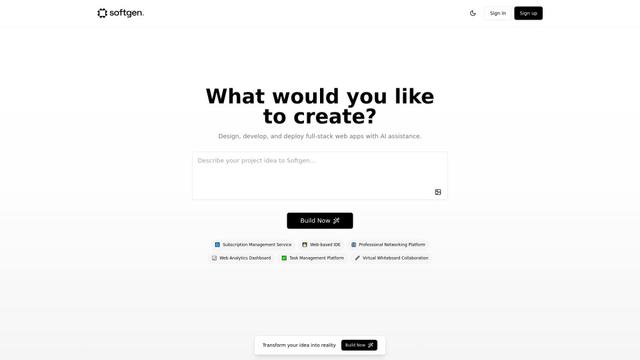
Softgen.ai is an AI-powered full-stack project generator platform that enables users to transform their ideas into functional web applications without coding requirements.
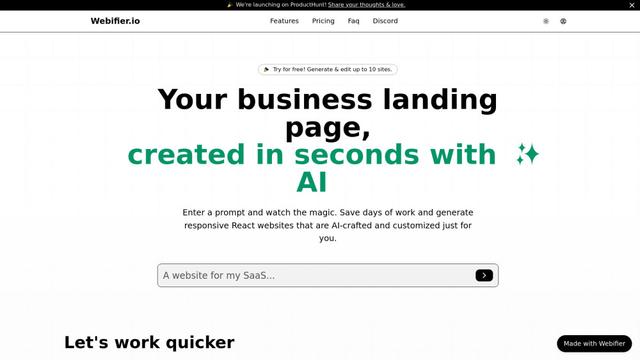
Webifier
Webifier is an AI-powered tool that transforms text prompts into fully functional React landing pages with clean, exportable code using NextJS14, TailwindCSS, and Shadcn components.
Popular AI Tools Like Croct
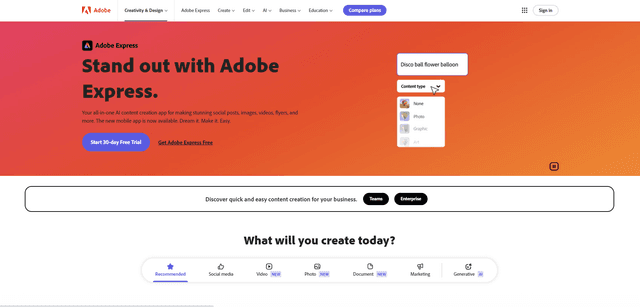
Adobe Express
Adobe Express is an all-in-one AI-powered content creation app for easily making stunning social posts, images, videos, flyers, and more with professionally designed templates and assets.
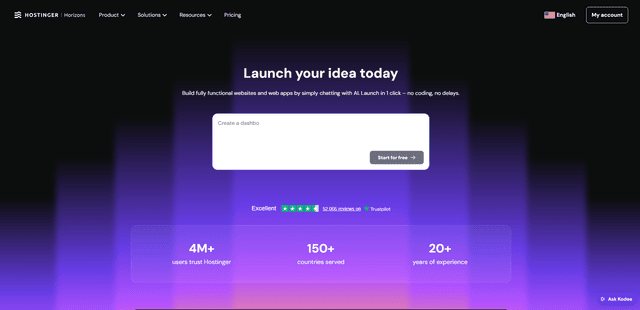
Hostinger
Hostinger is a web hosting and domain service provider offering AI-powered tools like Horizons that enables anyone to build, edit, and publish custom web apps and websites without coding through a simple chat interface.
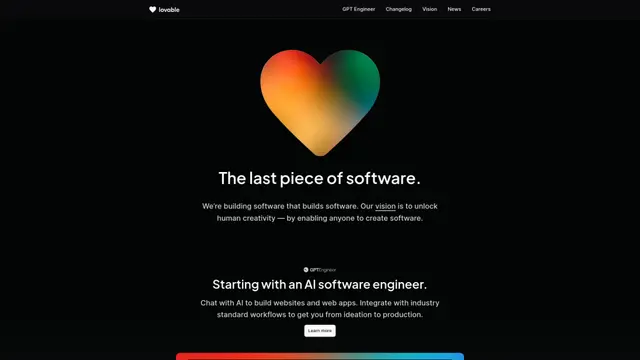
GPT Engineer
GPT Engineer is an AI-powered software development tool that enables anyone to build web applications by chatting with an AI engineer.
Manus Shopify Connector
Manus Shopify Connector lets you build a Shopify-backed storefront, manage your catalog, and generate data-driven campaigns from a single chat—using Shopify APIs with OAuth-scoped access and Shopify checkout.