Barely a month after releasing GPT-5.1, OpenAI moved at lightning speed to unveil GPT-5.2. Why the urgency? The answer is clear: Gemini 3 Pro has dominated the market for weeks—sweeping major benchmarks and successfully drawing a significant number of ChatGPT users into Google’s ecosystem. Now, OpenAI is striking back.
As one of the leading AI tools Directory, AIPURE is committed to delivering the latest AI innovations and the most comprehensive guides on how to use them effectively. We closely track every major shift in the AI landscape—especially developments from industry giants like OpenAI and Google.

With the release of OpenAI GPT-5.2 and Google Gemini 3 Pro, many users are facing a familiar dilemma: which AI chatbot is truly the better choice for everyday use? In this in-depth comparison, AIPURE puts GPT-5.2 vs. Gemini 3 Pro head-to-head through multiple real-world tests, helping you determine which model deserves to be your daily AI powerhouse.
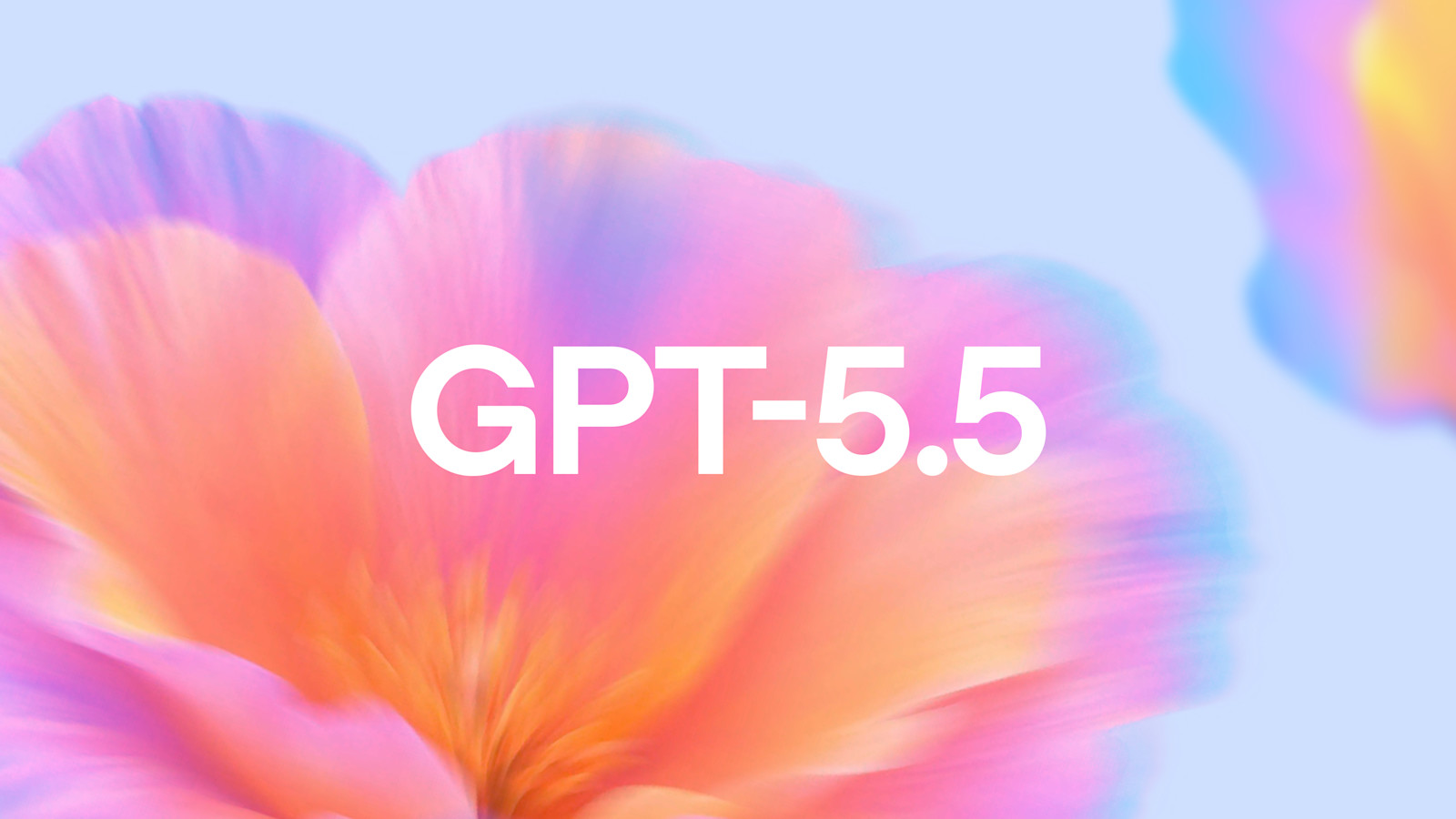

GPT-5.2 vs Gemini 3 Pro: Understanding the Basics
Before diving into hands-on testing and real-world performance, it’s important to first understand the fundamental differences between GPT-5.2 and Gemini 3 Pro. This includes key background information such as release timing, model architecture, core capabilities, and pricing.
To save readers from switching back and forth between official websites, AIPURE has compiled a clear, side-by-side comparison table below, summarizing the essential details of both AI chatbots at a glance.
| Category | GPT-5.2 | Gemini 3 Pro |
| Release Date | December 11, 2025. OpenAI launched GPT-5.2 as a rapid upgrade in response to growing competition, introducing multiple performance tiers. | November 19, 2025. Gemini 3 Pro was released as Google DeepMind’s new flagship AI model. |
| Model Family / Type | GPT-5.2 family, including Instant, Thinking, and Pro versions, built on OpenAI’s latest GPT architecture. | Gemini 3 family flagship (Pro), positioned as a high-performance, general-purpose multimodal model. |
| Benchmarks Evals |  | |
| Core Features | - Strong improvements in text generation and logical reasoning - gpt-5.2 thinking mode designed for complex, multi-step problem solving - Optimized for professional documents, reports, coding, and structured outputs | - Advanced multimodal understanding (text, image, audio, video) - Deep integration with Google Search and Google apps - Includes advanced "Deep Think" and agent-style reasoning modes |
| Context Length | Up to 400K tokens (varies by API tier), suitable for long conversations and large documents. | Up to 1M tokens, making it more suitable for ultra-long documents and large-scale analysis. |
| Multimodal Support | Supports text and image input, with generation focused mainly on text; video/audio features are limited or tool-dependent. | Native multimodal input and output across text, images, audio, and video. |
| Best Use Cases | Deep reasoning tasks, professional writing, software development, data analysis, and logic-heavy workflows. | Multimodal understanding, long-context research, and workflows tightly integrated with Google Workspace and Search. |
| API & Developer Support | Mature gpt-5.2 API with chat, responses, realtime, and assistant endpoints—ideal for building apps, agents, and automation pipelines. | Gemini API via Google Cloud and Vertex AI, optimized for enterprise use and Google ecosystem integration. |
| Pricing | gpt-5.2 / gpt-5.2-chat-latest pricing (API): • Input: approx. $1.75 / 1M tokens • Output: approx. $14 / 1M tokens (Reasoning tokens are billed as output) | gemini-3-pro-preview pricing (API): • Input: approx. $1 / 1M tokens • Output: approx. $6 / 1M tokens (Exact pricing varies by plan and region) |
| Official Article | Introducing GPT-5.2 | A new era of intelligence with Gemini 3 |
From the comparison above, it’s clear that OpenAI moved quickly to respond to Google’s Gemini 3 Pro release, rolling out GPT-5.2 shortly afterward. Notably, OpenAI did not release just one model, but three GPT-5.2 variants at the same time, targeting different performance and cost needs.
OpenAI positions GPT-5.2 as the most intelligent general-purpose AI model available today, with a particular strength in handling real-world knowledge and complex reasoning tasks. Many industry experts also tend to prefer GPT-5.2’s outputs over other competing models, including Gemini 3 Pro, especially in professional and knowledge-heavy scenarios. And looking at the benchmark results shown in the table, GPT-5.2 outperforms its competitors across nearly all evaluated categories. This suggests stronger performance in logical reasoning, as well as a greater ability to generalize and solve unfamiliar problems it has not encountered before. In terms of general knowledge coverage, GPT-5.2 also appears to maintain a noticeable lead over Gemini 3 Pro.

(Image Credit: https://openai.com/index/introducing-gpt-5-2/)

(Image Credit: https://ai.google.dev/gemini-api/docs/pricing)
That said, benchmarks alone do not tell the whole story. Many users—including the AIPURE editorial team—place less emphasis on synthetic scores and care more about real-world usability, stability, and cost efficiency. When comparing the API pricing of GPT-5.2 and Gemini 3 Pro, Gemini’s pricing structure appears more competitive, which could be a deciding factor for developers building at scale.
In the following sections, we’ll evaluate how GPT-5.2 and Gemini 3 Pro actually perform in real-world scenarios from response speed, multimodal capability, and image creation.
GPT-5.2 vs. Gemini 3 Pro: Response Speed & Hallucination Test
The first aspect we tested was response speed, along with whether the new models still suffer from hallucinations, especially in terms of basic logic and language understanding.
You may remember a once-viral question that confused many AI models:
🤔❓ “How many r’s in 'strawberry'?”
Earlier generations of large language models frequently failed this simple task. After multiple iterations, most mainstream models can now answer it correctly. To evaluate whether similar weaknesses still exist, we posed a new but comparable popular question to both models:
🤔❓ “How many r’s in 'garlic'?”
The correct answer is straightforward: there is only one “r” in “garlic.”

In our test, GPT-5.2 responded almost instantly, demonstrating impressive response speed. However, it gave an incorrect answer, indicating a hallucination or a lapse in character-level reasoning.
By contrast, Gemini 3 Pro took slightly longer to respond, but delivered the correct answer, showing stronger accuracy and more reliable language understanding in this specific test.
Interestingly, AIPURE also noticed that a user on X (formerly Twitter) tested the same question on DeepSeek R1 and Qwen3-Ma. In that comparison, both models answered correctly, suggesting that GPT-5.2’s mistake was not universal across leading LLMs.

(Image Credit: https://x.com/kyleichan/status/1999292461450166350)
💡 Key takeaway
- GPT-5.2: Faster response, but prone to occasional hallucinations in simple character-count tasks
- Gemini 3 Pro: Slightly slower, but more accurate in basic logical and linguistic reasoning
This test highlights an important point: speed does not always equal correctness, and even advanced models like GPT-5.2 can still struggle with deceptively simple language problems.
GPT-5.2 vs Gemini 3 Pro: Multimodal Capability Comparison
To evaluate the multimodal capabilities of GPT-5.2 vs. Gemini 3 Pro, we conducted a simple yet practical image-analysis test. We uploaded a screenshot of a random website—LocalSavingGuide, a content site that appears to offer money-saving tips and consumer advice—and asked both models to analyze the image.

(Image Credit: https://localsavingguide.com/)
🔥GPT-5.2 Performance
GPT-5.2 responded noticeably faster than Gemini 3 Pro, generating its analysis almost instantly while Gemini was still processing.
In terms of accuracy, GPT-5.2 delivered a highly detailed and structured description:
- It correctly identified the image as a screenshot of a LocalSavingGuide webpage.
- It accurately described the overall layout, including the grid-style article listing.
- It successfully recognized and summarized all visible text elements, including article titles shown in the screenshot.
- It went a step further by identifying the target audience, such as: Readers looking for money-saving tips, UK shoppers, and budgeters.
Overall, GPT-5.2 demonstrated strong visual text recognition, contextual understanding, and fast response time, making its output both precise and immediately usable.

🔥Gemini 3 Pro Performance
After several attempts, Gemini 3 Pro eventually generated its response. While slightly slower, its output still showed solid multimodal reasoning:
- It correctly identified the website layout and general structure. The description was less detailed than GPT-5.2 in terms of visible text extraction.
- However, Gemini 3 Pro offered additional analytical insights, including: "Key Takeaways", broader contextual interpretation of the website’s purpose.
This higher-level analysis added value, though it came at the cost of speed and textual precision.

🔥Editorial Verdict from AIPURE
From AIPURE’s editorial perspective, GPT-5.2 clearly performed better in this multimodal test. Its faster response time, more complete text recognition, and precise layout description make it more reliable for real-world tasks such as website analysis, content auditing, and visual data extraction.
That said, Gemini 3 Pro’s contextual analysis is still impressive, particularly for users who prioritize interpretive summaries over detailed visual parsing.
GPT-5.2 vs Gemini 3 Pro: Image Generation Test
Next, we put GPT-5.2 vs. Gemini 3 Pro to the test in image generation, an area we were particularly curious about.
At AIPURE, we have long been big fans of Google’s Nano Banana, especially since the release of Nano Banana Pro. We frequently use it to generate featured images and banners for our articles thanks to its consistently high-quality results. Before running this test, we honestly believed that OpenAI still had a noticeable gap to close in image generation—this has traditionally been Google’s home turf, and Nano Banana Pro has set the bar extremely high.
To ensure fairness, we gave both models the exact same prompt, asking them to generate a banner image for the article you are currently reading.
Gemini 3 Pro finished first, while ChatGPT was still processing. Let’s start with Gemini’s result.
We genuinely loved the banner generated by Gemini 3 Pro. It followed the prompt almost perfectly:
- The text (“GPT-5.2” and “Gemini 3 Pro”) was rendered clearly and accurately
- The color balance felt polished, futuristic, and premium
- The overall composition had a strong high-tech aesthetic
- Logos were recognizable and correctly styled
In short, Nano Banana Pro absolutely lived up to expectations.

(This Image was generated by AIPURE using Nano Banana Pro)
A few minutes later, ChatGPT (GPT-5.2) completed its image generation. To be fair, it did follow the prompt quite well in terms of layout and structure. However, the overall color handling—particularly the rendering of the Google logo—was, frankly, less convincing. The visual consistency and brand accuracy were not on the same level as Gemini’s output.

(This Image was generated by AIPURE using GPT-5.2)
For now, it’s clear that ChatGPT still has room for improvement in image generation, especially when compared directly with Gemini 3 Pro. As a result, we’ve decided to use Gemini’s image as the official banner for this article.
Final Thoughts: More Real-World Tests Coming Soon
That wraps up this round of testing for GPT-5.2 VS Gemini 3 Pro.
That said, this is just the beginning. Over the next few weeks, the AIPURE team plans to conduct more practical, real-world comparisons, including tasks that matter most to everyday professionals—such as PDF summarization, PPT generation, and productivity workflows.
Be sure to bookmark AIPURE so you don’t miss our upcoming hands-on tests, the latest AI tool updates, and in-depth reviews designed to help you choose the right AI for your work. As always, we’ll continue to share honest insights, real use cases, and clear comparisons—so you can stay ahead in the fast-moving AI landscape.